People who buy brand new Land Rovers are doing people like me, who buy old ones, a massive favour.
How so? Because without people buying these cars when new.. I have no entrance into luxury car ownership.
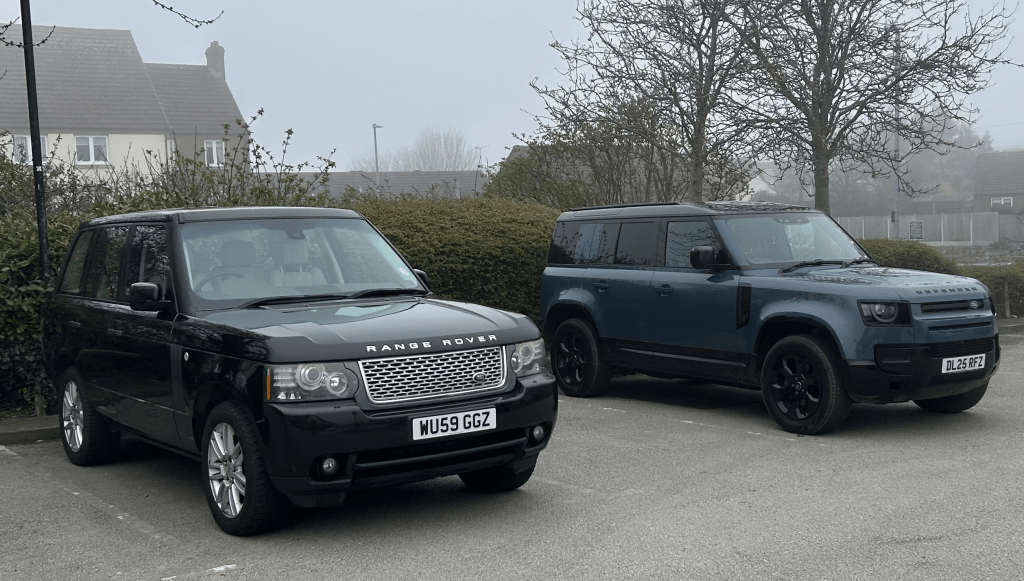
I’m looking at you, lovely blue Defender.
Rory Sutherland – my favourite Marketing Svengali – talks about this quietly fantastic altruism. Someone pays top money for a brand new Range Rover in 2009. It depreciates steadily in value until.. Bingo. I can pick it up for £10k.
I get the exact same car as the original owner. Provided I wait a few years first. Fourteen years.
Apart from this patience and a tolerance for the odd scratch and imperfection, there is one other thing you need. A maintenance budget. My ownership period is not just about enjoying a luxury vehicle. It’s about preserving it. On occasion that can be costly. £5k kind of costly… in my 2.5 years of ownership.
Thanks to the original owner, the Defender pictured here might also be mine one day. Perhaps in 2039.
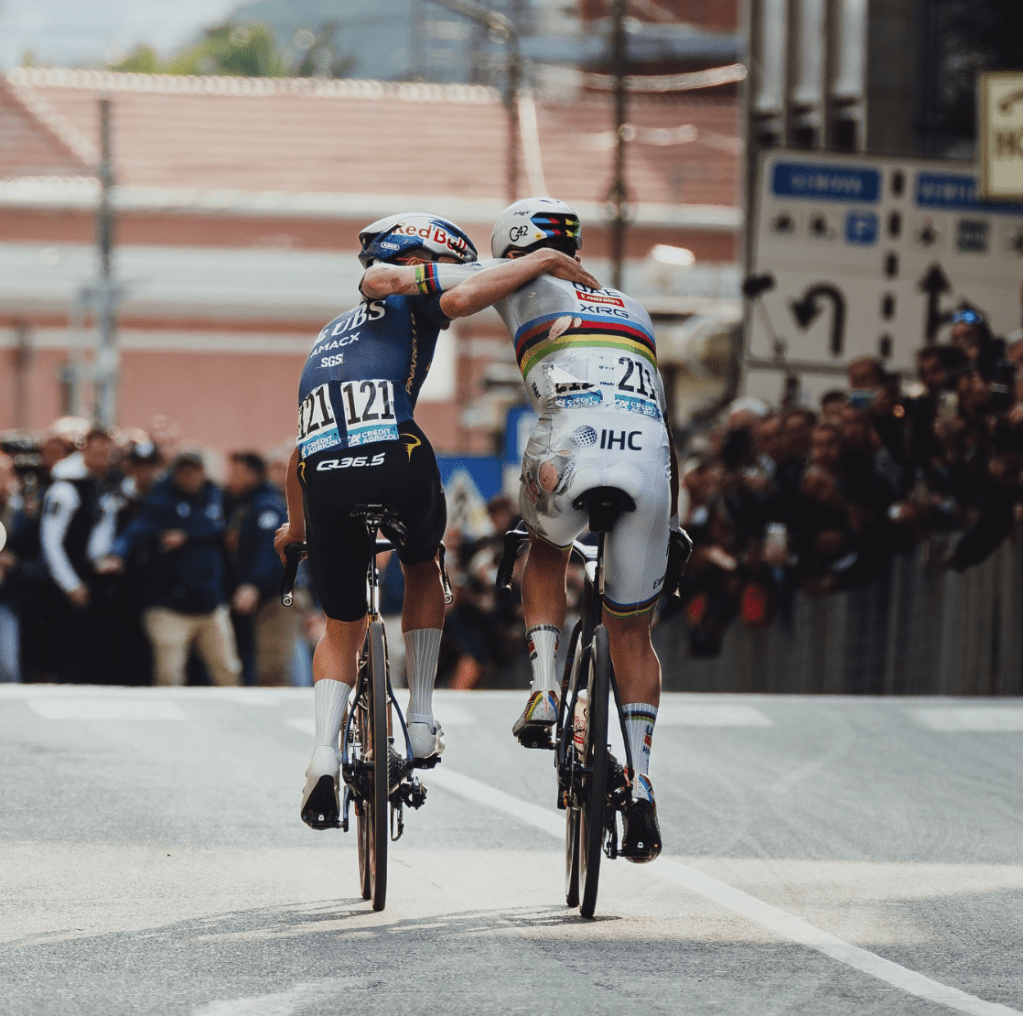
Last weekend’s Milan – San Remo finished with two riders descending the legendary Poggio into San Remo. World-Champion Tadej Pogacar and Tom Pidcock majestically held off the charging bunch, and were separated on the line by a scant half wheel. Pogacar raising his hands in victory.
Sport at its finest.
But the image that stayed with me came just afterwards. The only one I saw taken from behind. It was posted on Instagram by runner-up Pidcock (left). He made sure to credit pro snapper Alan Bučar Vukšić.
So how did he get this shot?
By positioning himself 200 yards beyond the finish line and quickly turning and firing again after they had passed. A different perspective. Uniquely captured.
I’m not bad with an iPhone. But this is proper photography. Bravo.
Visiting the Household Waste Recycling Centre should be a chore… yet isn’t. Even when it’s Saturday and you’re queuing to get in.
I’ve been coming to such places all my life. In the 70’s and 80’s they were called Tips.. Council Tips. ‘Can we come, Dad’ we’d ask, as he was hitching a trailer full of rubble and garden waste to his Cortina or Morris Ital.
Not much health and safety those days. Kids didn’t have to stay in the car, for one. I recall those tips being smaller, less demarcated. And instead of the current helpful staff in hi-vis orange, there was usually a solitary, surly bloke in a donkey jacket. His job was to man the gate – but he’d quickly come over for a nose if he thought you had something of value.
The Council Tips were done up years ago. Although they still seem to smell the same. But there are now friendly staff members ready to answer the inevitable ‘where does this go, mate?’ questions.
Luckily, the modernisation hasn’t removed the charm. Everyone shares the same purpose. Disposal. Watching your fellow tippers appeals to a curious mind. You find yourself quietly wondering, for example, why that chap is slinging that wheelbarrow when there’s clearly years of life left in it.
The tip is a place you want to linger. Fair enough. By the time you’ve queued up and reverse parked… you feel you’ve earned the right to take it slowly. To enjoy it. Perhaps see what the next lot are getting rid of, before you leave.
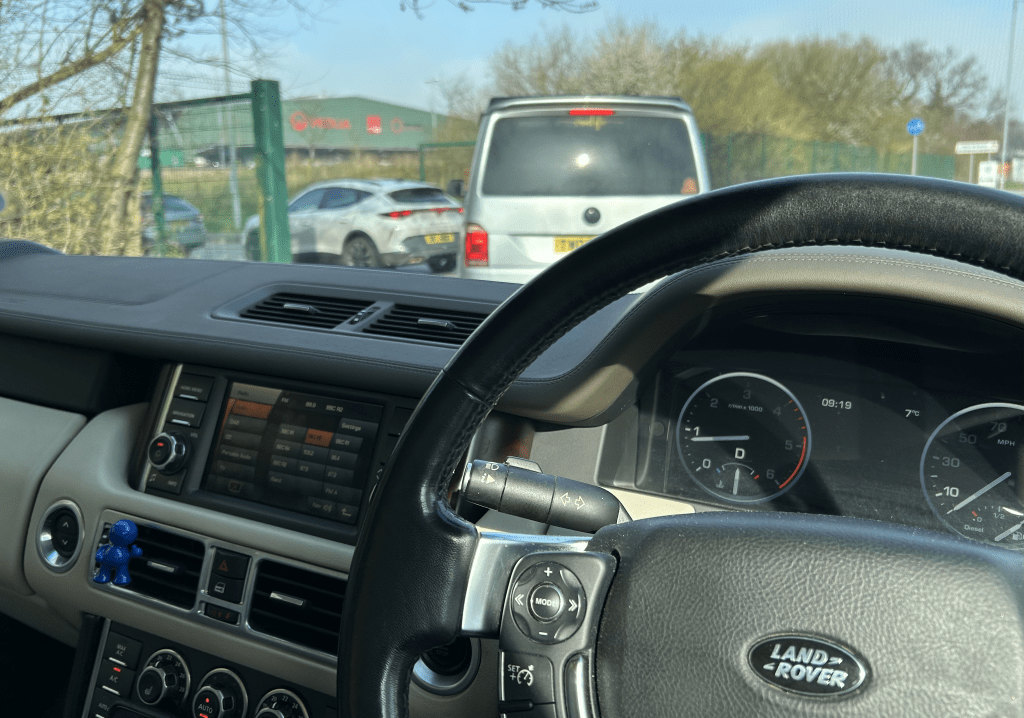
The old Range Rover feels lighter on departure. So do you. You’re smiling as you drive past the queue coming in. Maybe even nodding your head. Satisfied that the car has been load carrying for once… part of her repertoire. It’s good to exercise that now and then.
Good exercise for me also. I’ll be back next week.
The average UK worker endures almost an hour a day commuting.
For me, it’s rather more than that. I live in Shropshire and work in Surrey. Both glorious British counties. Separated by 170 miles.
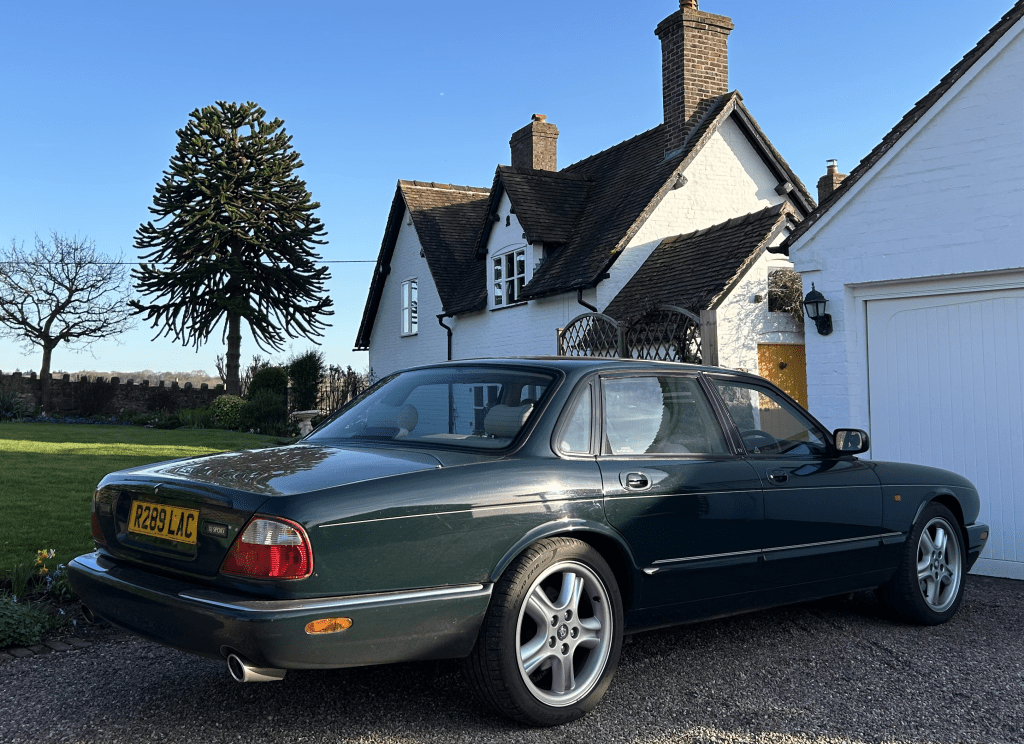
I’m not complaining. Not today. Not when things look like this – see pic – once you’ve arrived home safe and sound.
Commutes aren’t usually this idyllic. The weather’s nearly always worse… especially in March. And it’s likely that something at work – or home – is playing on your mind as you shuffle slowly between the two. Usually in traffic.
But after doing this weekly commute for 13 years, I’ve had time to make peace with it and also better optimise the experience. Transform it from an obligation slightly dreaded… to something more appreciated.
Driving a car you love – and that suits you – makes for far better motoring.
My original Surrey-bound chariot was a Fiat 500 supermini. A cute, quirky little thing. Fun and reliable… but rattly and always a bit fragile next to the HGVs. Nicely cheap on fuel though.
A few years on my finances were in better shape and my teeth were fed up with the rattling. So I splashed out on the old Jag pictured here – a similar model to the one my Dad had when new, 28 years ago.
The three-hour journey was transformed. I was in a car I adored. And after some light restoration and with ongoing attentive maintenance she runs better than something her age has any right to.
But it’s not just the machinery.
Shifting my departure times to miss the worst traffic is equally transformational.
This means getting up super early to be away by 4am and in the office by 7. Don’t panic… it’s only once a week. And it helps I’m an early bird and don’t despise being up when everyone else is enjoying 3 hours more sleep.
Then on the return leg a few days later I either leave at midday… or cruise home between 6-9pm when most people are off the roads and enjoying their evening.
It’s not always about the destination. It can also be about how you get there. Experience has taught me that the journey itself is worth optimising. Minimise traffic. Love the car.
You stop enduring the commute and start owning it.
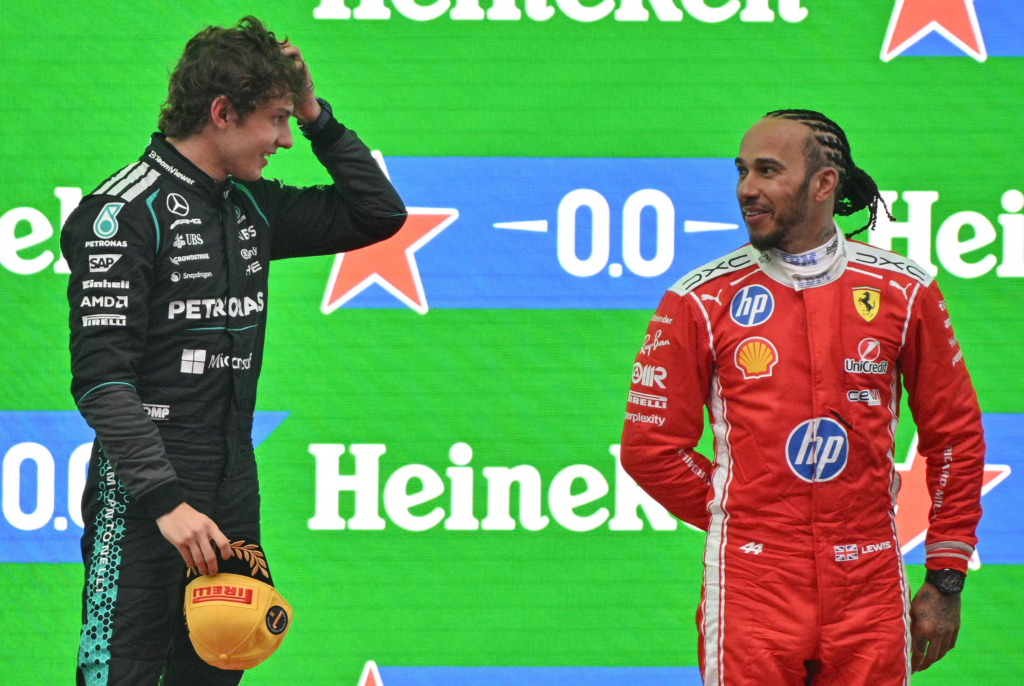
This race was more like it. And what a podium photo — capturing a lovely generational moment between first-time race winner Kimi Antonelli and Lewis Hamilton.
I hated the cars last week in Australia, but I can’t keep up a strop for long, so tuned in today in a better mood.
And stayed that way.
Partly because Carlos Sainz drove faultlessly to 9th for a couple of points in the under-performing Williams — always my favourite team. But mainly because Lewis Hamilton rediscovered his legendary touch in taking 3rd and his first podium for Ferrari.
Yes, Lewis had an awful first season in red. A year to forget. Not that his private banker would have minded the reportedly £50m base salary. But today Lewis had the clear beating of team-mate and long-time Ferrari darling, Charles Leclerc.
Credit to pro snapper Hector Retamal for this wonderful photo. It captures the affection between Hamilton and Antonelli — the young man who inherited his seat. Kimi looks like he can barely believe he has won.
Lewis appears paternally aware of that… perhaps also being reminded of his own first Grand Prix win, 19 years ago.
I travel to our house in Florence about ten times a year.
Usually Ryanair or EasyJet from Manchester to Pisa. About 7–8 hours from Shropshire door to Florentine porta, and about £400 all‑in — flights, airport parking, fuel etc.
Remember that figure.
Because I am seriously considering a slower, more expensive, but possibly far more enjoyable way of doing the journey.
Why? Because I am sick of air travel. The airport/security experience is challenging. The flights are cramped. And I’m getting more anxious by the year. Totally unreasonably, as I clearly have way more chance of issue or injury en route to the airport than on any commercial flight. But it’s my arse 12km from terra firma… and I don’t like it.
So I’ve been thinking about stowing my cabin luggage in the Range Rover and driving instead.
This started on a turbulent flight a year or so back. Captain Ryanair thought he would heroically land at Pisa. In a tempest. I later learned every other plane diverted. Ours did not. Even the cabin crew were hugging when we got down safe and sound. I vowed if fate spared me I would never fly again.
I did fly again. Five days later. You have to, or the fear takes over. But the idea of Shropshire–Tuscany–Shropshire by gentle waft over land never went away.
The idea grew recently. I have a bike needing to get to Italy. Too much faff to take it through the airport.
Yes, traditional couriers – FedEx, UPS etc – could collect it from the house. But you can end up paying import duty on its value. Not correct for a used personal item, but often the default outcome.
There are also “man with a van” services running the UK–Italy route. But that still means trusting a total stranger to carry your pride and joy 1,000 miles to Tuscany.
Mmmmm. Maybe not.
So I did what any thinking person does when caught on the horns of a modern dilemma. I turned to ChatGPT. Which turned into a gloriously enjoyable rabbit hole.
First. Calculations. ChatGPT had a think, asked for the real‑world mpg of my diesel Range Rover and gave me a range of £1k–£1.2k to do the return trip to Florence. This included fuel, ferry or chunnel, tolls and overnight stops. Punchy. About three times the cost by air. Plus it would take the best part of two days instead of 7–8 hours.
And yet. There might be something in this.
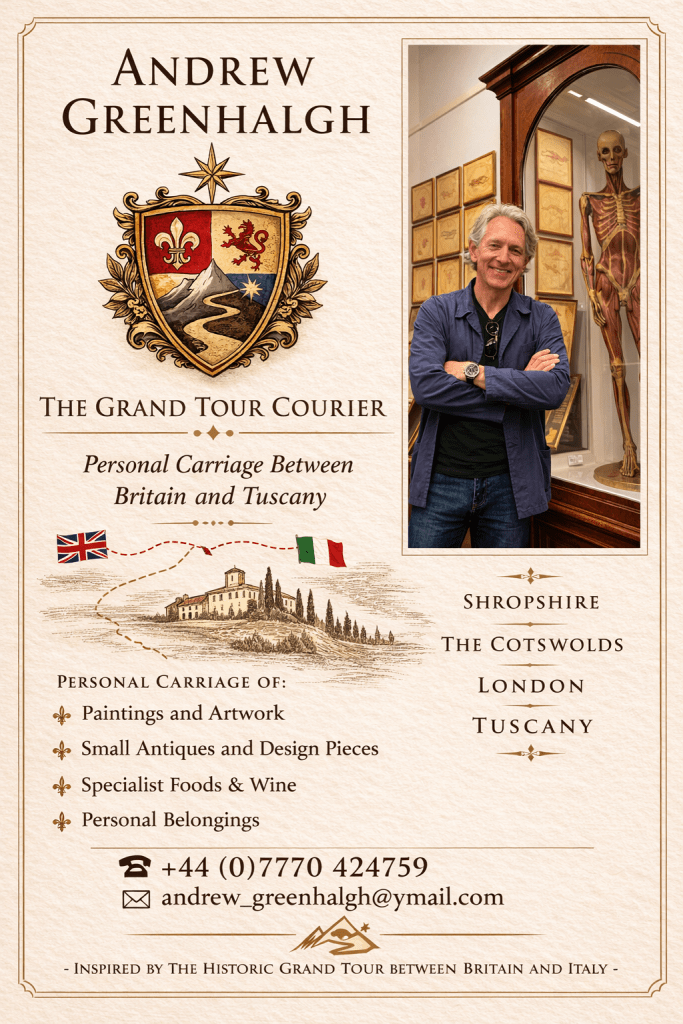
So I bantered around with my lifestyle advisor – ChatGPT – and before long it suggested I could offset the cost by offering to carry other people’s personal effects and objects of value from the UK to Italy.. or back. Genius!
Fifteen minutes later we had a business plan and flyer (see pic) entirely generated by our online guru. Although fair enough, I had to upload a recent-ish photo, taken by my niece when we visited the wax anatomicals at La Specola Museum on Via Romana. Deftly using the sepia-esque colouring of the museum exhibits to stylise the flyer was classy and impressive.
What next? Maybe I will take my bike over and see how the land journey pans out in reality. The drive itself — two days through France, over the Alps, into Tuscany — is one of the great European road journeys. The original Grand Tour. I can stop where I like, eat well, decompress, explore. With the added bonus: nobody asking me to remove my shoes at airport security.
There are downsides for sure. But it’s got to be worth a go. Stay posted for updates.
Racing Formula One drivers now have to lift off on the straights.
The chequered flag has dropped on the F1 season opener. And I am grumpy. Nothing to do with my favourite team, Atlassian Williams F1 Team, being on the back foot. They will advance.. given time.
No, it’s the sight of F1 drivers engineering, not driving, their way to the fastest lap by having to lift the throttle on the straight and ‘harvest battery’. Instead of driving eyeballs out kamikaze style. They actually go slower in some parts of the lap.. so they can go faster overall.
Pushing buttons and fiddling with knobs on the steering wheel has long been a feature of Formula One. No problem with that. But getting drivers to do things like ‘lift and coast’ every lap to charge up the battery – which makes up 50% of the 2026 power units – is not racing. It’s engineering. And overly complicated engineering.
We want our drivers to race. Yes, they can also think. There’s nothing wrong with a Professor Prost duelling with an aggressive car-muscler like Mansell. A thinking driver – a Hill, Button or Sainz – has always appealed to me over a blunter instrument like an early-career Verstappen or a Montoya.
But we are asking our drivers to be systems engineers, not just pedallers.
The real F1 systems engineers – the brainiacs – aren’t behind the wheel. They are back at the factory monitoring screens or sitting on the pit wall calmly giving instructions over the intercom. They do the engineering. And the drivers do what they have always been best at. Race hard. Win gloriously. Spray the champers afterwards.
Life feels correct that way. Jobs done by those best suited to them. Each to their trade.. Socrates said that. Or maybe Plato.
An engineer looks stupid spraying champagne. A racing driver looks silly having to lift off to go faster.
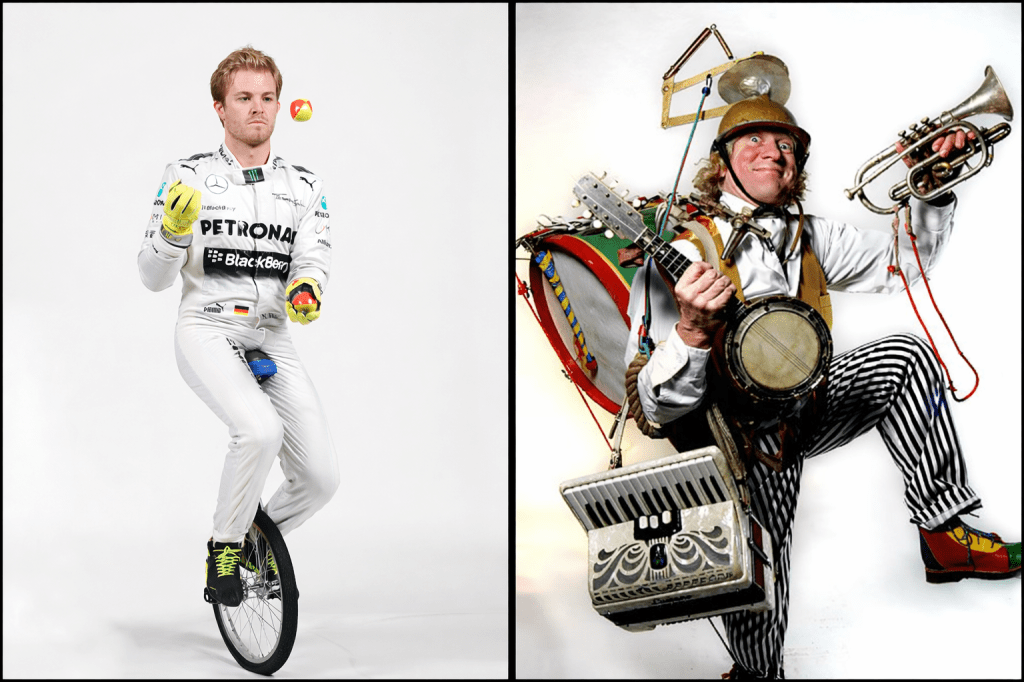
It reminds me that singer, songwriter, harmonica player and guitarist Bob Dylan is rightly considered a genius. But add a pair of cymbals strapped between his knees… and he becomes a half-wit.
That’s all it takes.. one pair of cymbals and you go from lauded genius to joked-about one-man band.
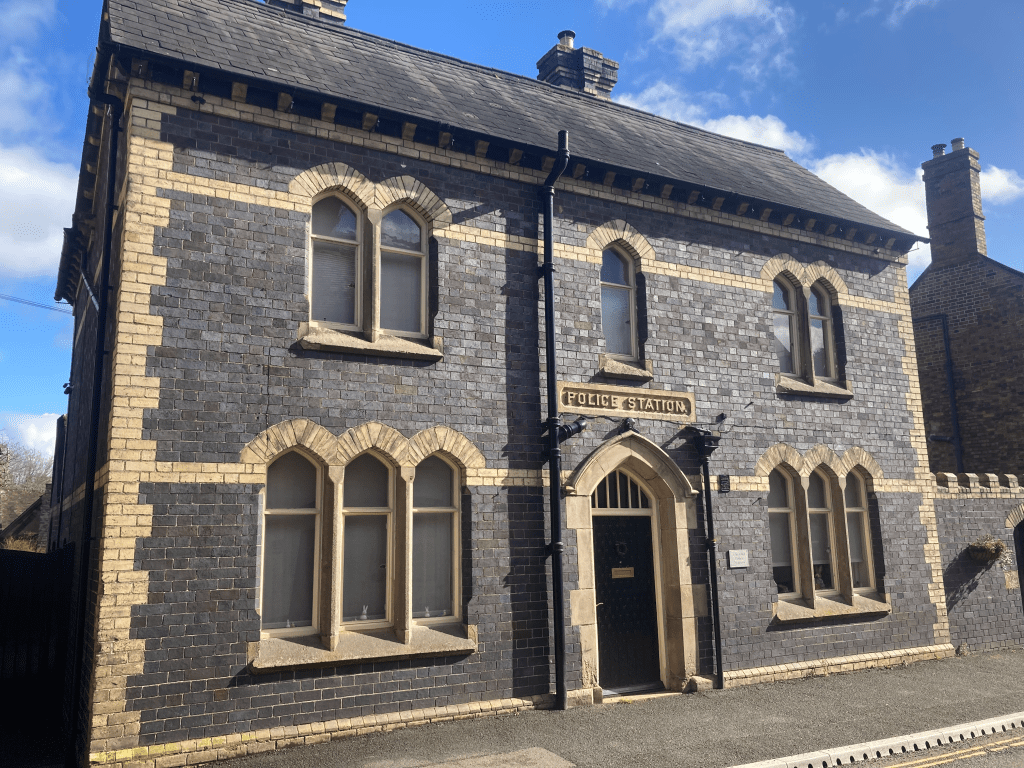
Of the 104 listed buildings in Much Wenlock, this is my stand-out.
The competition in this Shropshire town is strong. There is Priory House. Tudor‑style pubs. An old bank. A great couple of churches.
But this building grabbed my attention before I even noticed the words above the door.
POLICE STATION.
Which made sense. The building had already told me it was a place of order and authority.
Slightly austere: blue‑black – like a police uniform – bricks accented by the pale feature lines and window surrounds. The exactness of the slate roof and perfect duo of chimney stacks.
In a town of charming but slightly irregular buildings, this one feels striking. It feels professional.
And that may be the real trick here.
The Victorians didn’t just build a police station – they designed it to look like the law ruled there.
Solid. Ordered. Confident.
Even now, long after it stopped being a police station and became a private home, the building still carries that authority.
Which is probably why I was struck by it. Because it so clearly knows what it is.
But would I want to live there? Maybe. Some might think I’m a little too rebellious for the spirit of the place. But they’ve done it up lovely inside. You’d think you were in a Shropshire cottage.. not an old cop shop.
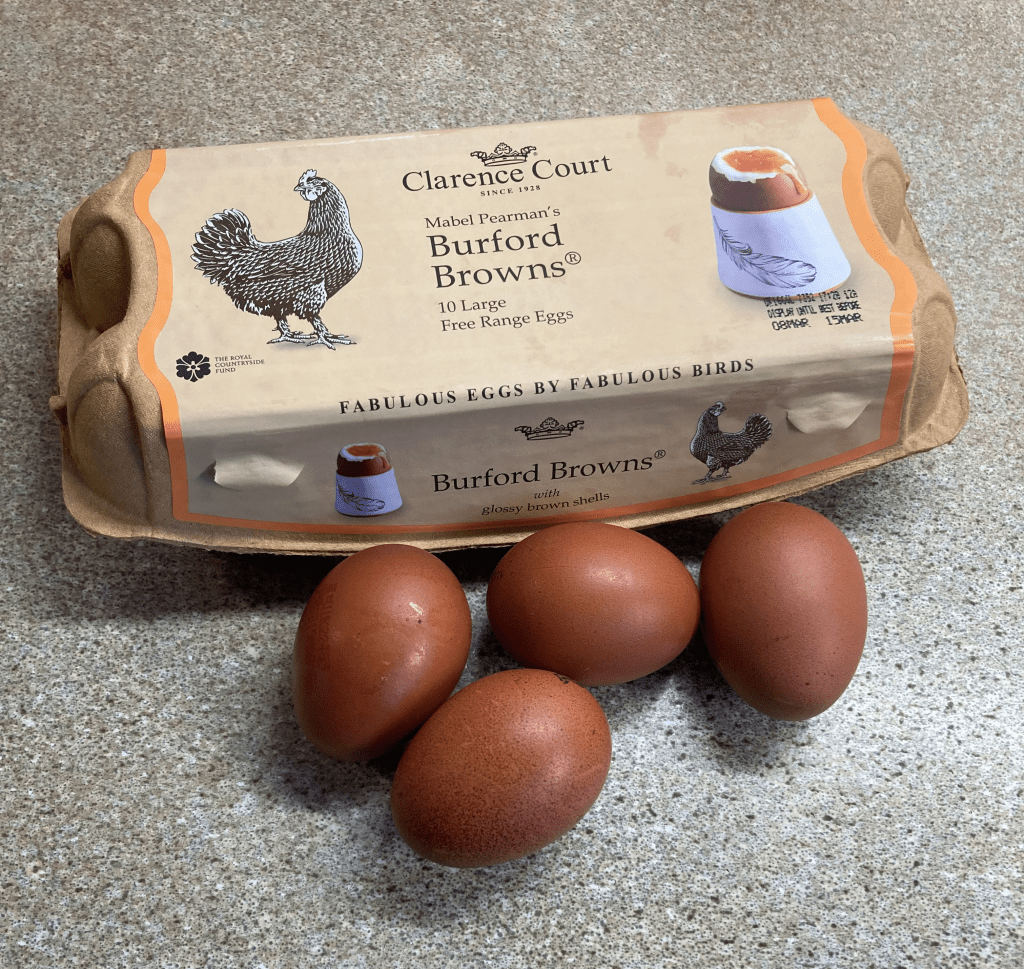
Today’s The Guardian piece about posh eggs being a shoplifting target caught my eye. Probably because I love a posh egg.
Burford Brown eggs – preferably in the carton of ten for relative economy – are the only brand I buy from our Waitrose. Their deep brown shells and aspirational packaging make them hard to resist.
And now it turns out that chancing shoppers aren’t smuggling the eggs out of the store under their jackets. Instead, they open the carton, swap them for cheap ‘Essential Waitrose’ eggs, and pay the lower price.
It reminds me of that story – or perhaps urban myth – about supermarkets selling more carrots than they buy.
What?
Well, we shoppers are now increasingly asked to bag and weigh our own fruit and veg. And some are apparently weighing expensive items… but pressing the carrot button. The carrot being the cheapest of vegetables, often weighed loose in conveniently unsuspicious quantities.
Supermarkets surely know this and quietly adjust prices to cover petty theft. Or perhaps the staff cost savings from letting customers self check-out are game-changing. Those self-checkouts might also be why some people feel no shame.. reasoning that if they are doing the work of a shop assistant, they might as well profit from it.
Which raises a question for posh egg shoppers like me.
Are my eggs really posh after all?
Vigilance must now ensue. I already open the carton to check none are cracked… or overly caked in chicken poo. Now I will also have to check whether they are genuine Burford Browns.. or whether some chancer has switched them.
Progress, I suppose.. or human nature at its worst.
Either way… I’ll be checking my Burford Browns more carefully next time I’m in the Waitrose egg aisle.
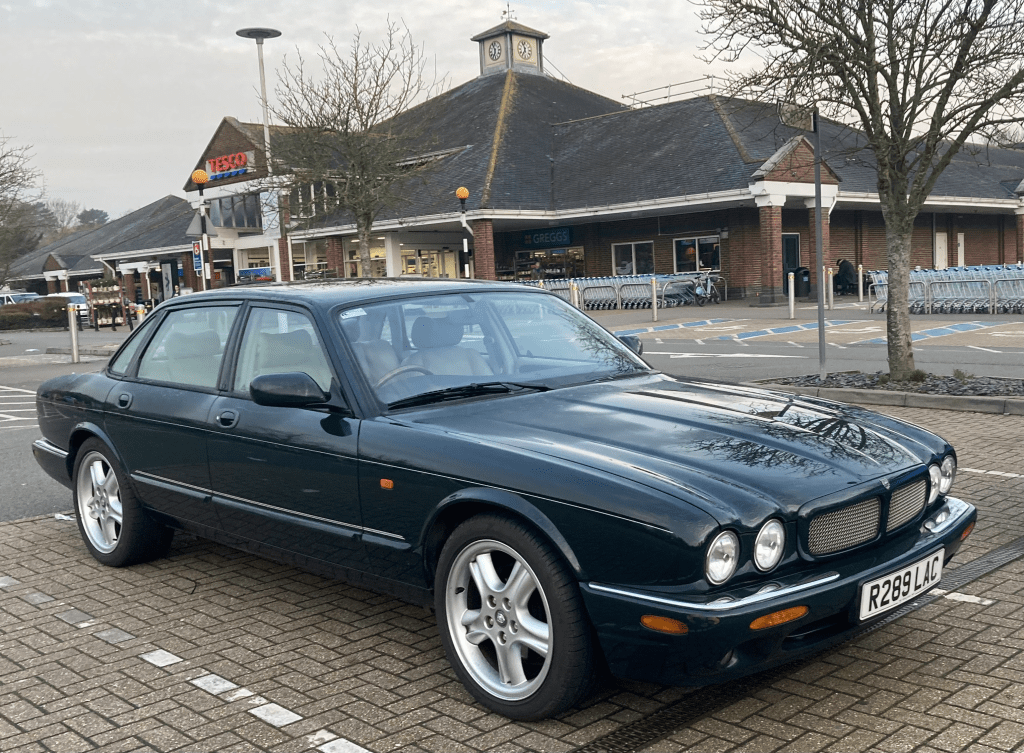
Does this 28-year-old Jaguar just spend its time gently wafting between a Shropshire cottage and the local Waitrose?
Not today.
When commuting south, we also call in at Tesco Guildford – one of their stores with the familiar clock tower.
Mostly for breakfast berries and yoghurt. Though I occasionally visit the bakery. The jam doughnuts carry my recommendation – and probably a health warning.
Jaguar and Tesco have more in common than you might think.
Both are British brands that have been around for over a century. Tesco traces its roots to 1919. The forerunner of Jaguar began life in 1922 before adopting the Jaguar name in 1945.
Neither are perfect. Occasionally unfashionable. And yet woven into everyday life in a way newer brands would kill for.
7am is the best time at Tesco. Plenty of space for the Jag between the builders’ vans.
My fellow shoppers are either insomniacs, fellow office morning-larks or working folk stocking up on their way to a job site. We’re well outnumbered by blue-clad staff pushing trolleys around picking orders for home deliveries.
It feels peacefully industrious. I’m set for the day.