When Brands Carried Meaning

What do Cadbury and Jaguar have in common?

For an old family friend of mine, quite a lot.

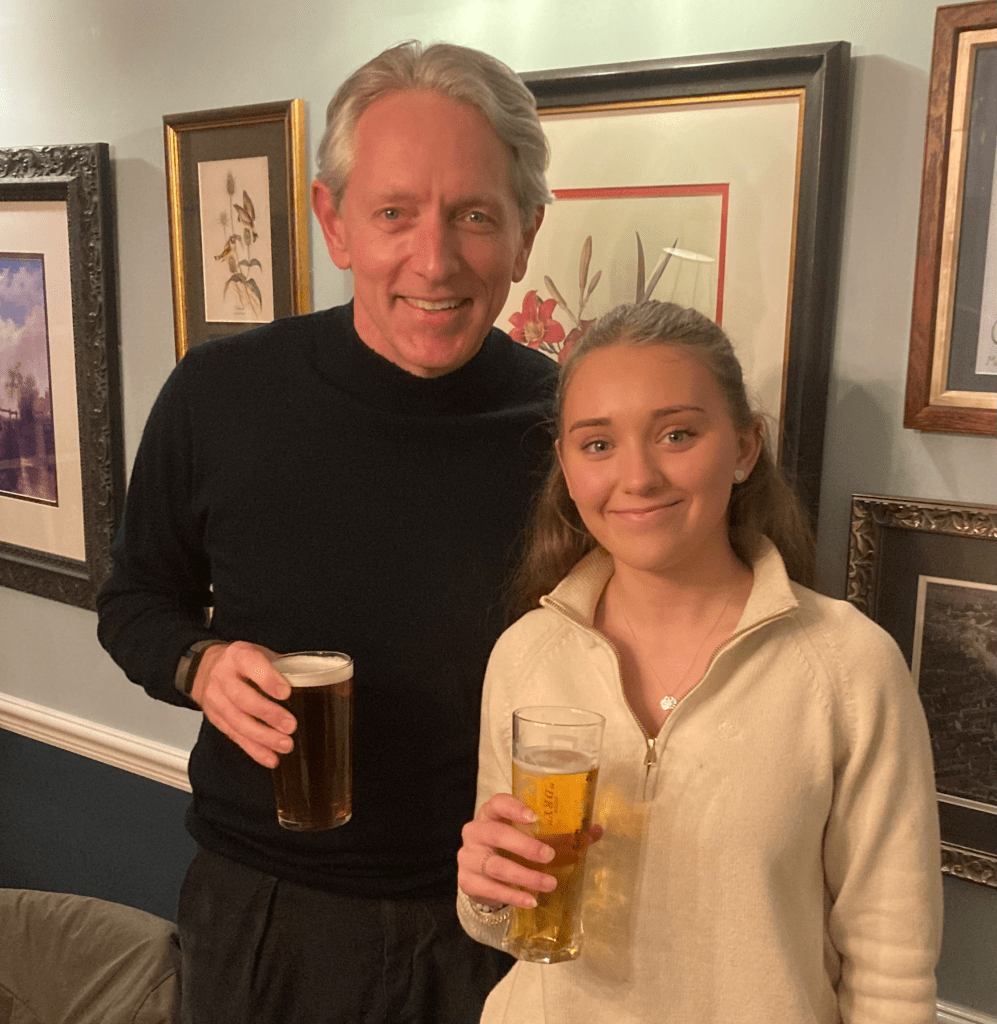
My ‘Uncle’ Geoff Williams spent his career as a mathematician specialising in logistics. In the 1960s and ’70s he worked at Cadbury under Sir Adrian Cadbury. In the 1980s he worked at Jaguar under Sir John Egan.

Of all the bosses he encountered, those two stood out. Very different leaders – but both deeply capable, both connected to their people and both conscious of the responsibility that comes with leading institutions rather than just companies.

Uncle Geoff was there on talent but humbly describes working for them as luck.
Luck because he experienced great leadership and stood inside those brands at a moment when they carried particular weight and meaning.

I also love that his career placed him inside two very different organisations that were part of the cultural furniture – applying quiet, behind-the-scenes logistical craft in service of something much bigger.

Careers are often valued by where they take us.
Sometimes the real privilege is simply where we’re allowed to stand for a while.

This isn’t photography. It’s something else.

This morning I fell down a LinkedIn rabbit hole after a photographer shared an AI-generated seasonal candy-cane portrait of himself.. basically this one, but with his head.. and gave it short shrift.

The comments in the thread were entertaining. Craft. Authenticity. Data centres. Water usage. The usual lines being quickly drawn.

And yet… it made me smile, so I asked ChatGPT to stick my head on it.. and now can’t stop looking at this image.

No professional photographer could have created it for me.
Not because they aren’t talented.. but because I’d never have asked. Never justified it. Never even imagined it. And No, nor would I ever pay for it.

That doesn’t make it better than photography.
It makes it different.

Sometimes new tools don’t replace old crafts.
Maybe they just create space for things that would never have existed.

But when it matters, I turn to professional photographers. This isn’t that. It’s something else.

Unfinished business

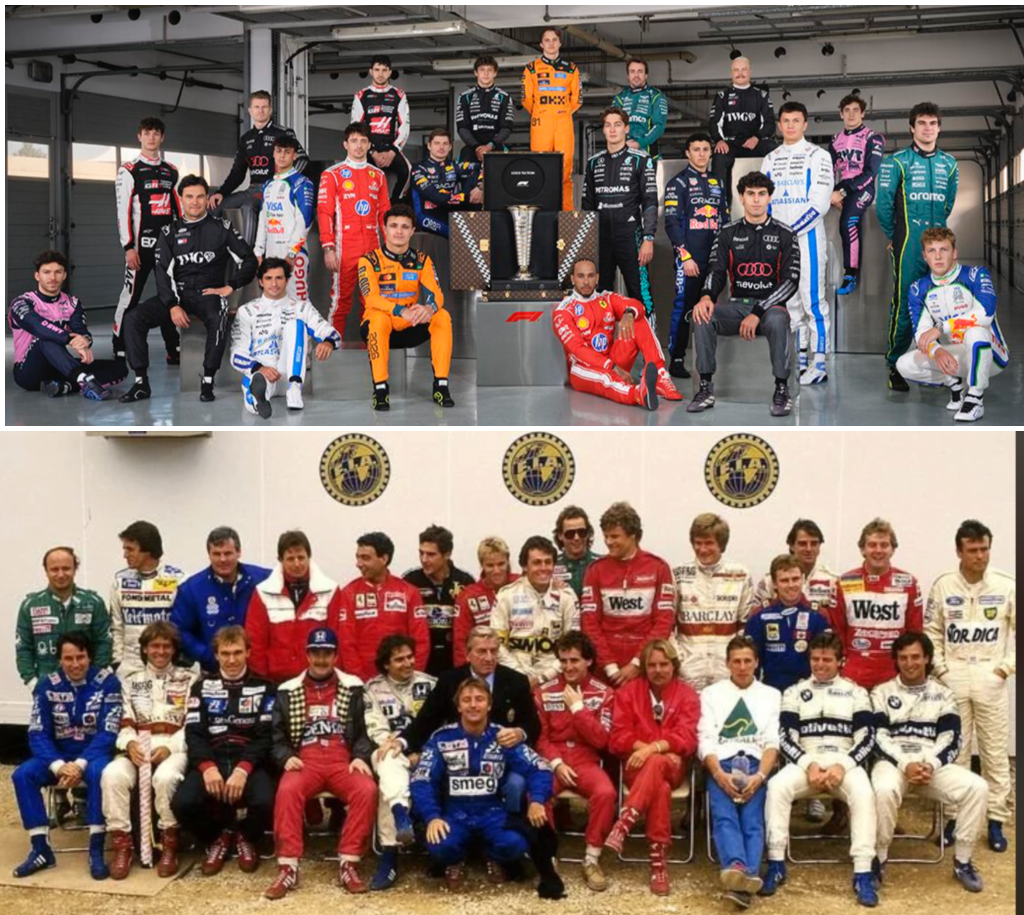
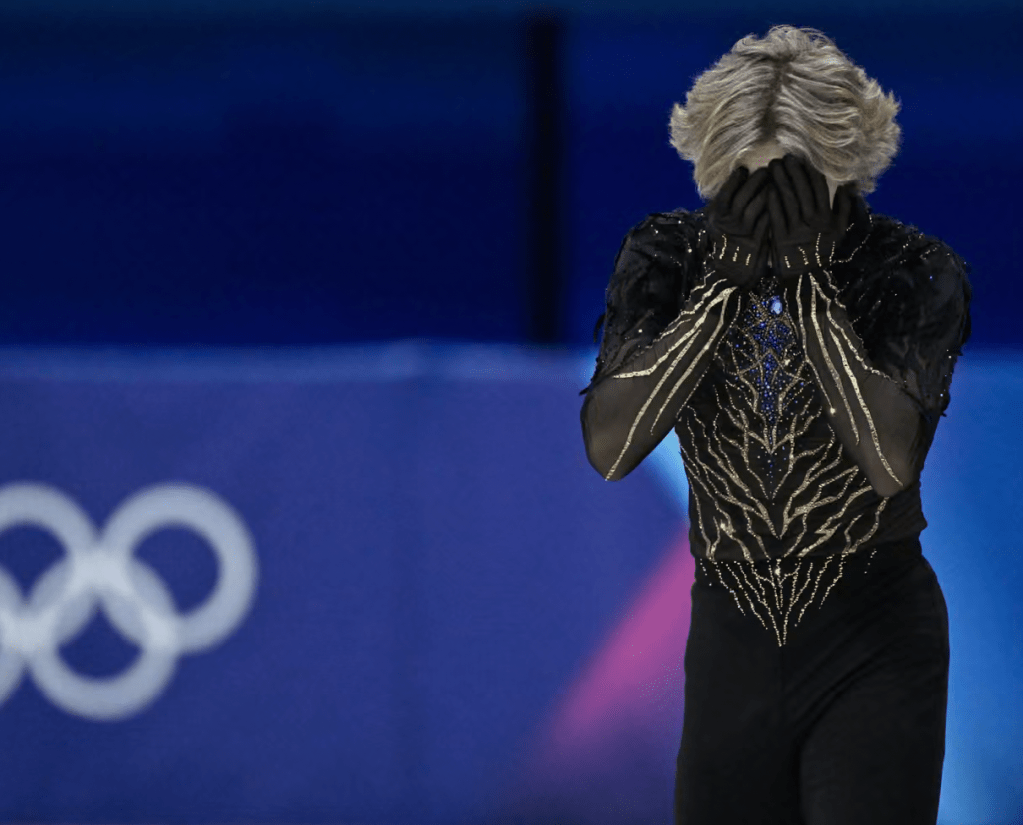
Over Christmas, I finally got round to watching the Brad Pitt Formula One movie.

Predictably, it wasn’t the racing that stayed with me. It was the nostalgia.. and more specifically, how the film traces the arc of one driver’s career.

Early on, we’re shown the Pitt and Javier Bardem characters depicted as two young Lotus teammates. At that point, the future must have felt open-ended. Success is assumed, not yet earned.


Fast-forward to today and their paths have diverged. One is still driving. The other now owns a team.

What struck me was the quiet idea that Pitt’s character remains competitive precisely because he has unfinished business. He never succeeded the first time around. Champions who return are often trying to relive something they’ve already ‘done’. That rarely ends well. The hunger is dulled by closure.

This character is different. He isn’t protecting a legacy or defending a title. He’s finishing a chapter that was left open when a horror crash – inspired by real Lotus driver Martin Donnelly – ended Sonny Hayes’ F1 story before he’d even won a race.

And that’s why (spoiler alert) the ending works so well. When he finally wins one, he can walk away. Not because he’s had enough, but because he’s complete.

This comeback arc is less about redemption and more about resolution. A rarer, more satisfying kind of ending.

In the real world, some people are driven by achievement. Others by unfinished sentences. And often, it’s the latter.. later in life.. who surprise us most.

A Window that Works

Perry’s of Eccleshall is a proper Staffordshire butcher not far from me, and until very recently I’d never actually stepped inside. But every time I drove past, I slowed down just to look at the window.

Because the window does a lot of work.

It quietly signals pride in the craft, an instinctive understanding of its customers, and the confidence that only comes from doing something well for a long time. Chalkboards, clear signage, good light.. and products displayed in a way that makes you stop, look, and smile.

What’s clever is that for years I became a tiny part of their marketing without ever buying a thing. I mentioned them to people. I pointed the shop out as I drove past.

And then yesterday, just before Christmas, I finally went in.. and came out with one of their large pork pies.

When people like me start doing your talking for you, you’ve probably got something right.

And Christmas seems a very good moment to notice businesses that understand that.

A Grade C.. and the Line I never forgot

My LinkedIn feed has been full of MiniMBA results posts recently. Lots of A grades. Lots of justified pride. It’s also reminded me of my own MiniMBA result from about five years ago.. an unspectacular Grade C. Not a near miss and not something to boast about. I messed it up.

Oddly, it’s not a bad memory. I really enjoyed the course and threw myself into it. It was a sharp refresher on marketing fundamentals and a welcome antidote to some of the woollier thinking that creeps into our profession. The exam, however, didn’t go my way.

When Mark Ritson released the results, he made a point of saying there was very little correlation between exam performance and being a good marketer. He went further, noting that some of the best marketers he knows were, in his words, ‘shithouse at exams.’ It was a genius thing to say.

Because the people who got A grades would enjoy the moment, update their profiles, and not even register that he’d said it. But those of us who did badly remembered that line forever.

Seeing all those results posts now makes me smile. I’m genuinely pleased for the high scorers. But I’m also quietly grateful for my unglamorous Grade C.. and for the reminder that great exam results are not always a good proxy for judgment, curiosity, and effectiveness in the real world.

In the end, my Grade C faded.. but Ritson’s line didn’t. That’s good storytelling.

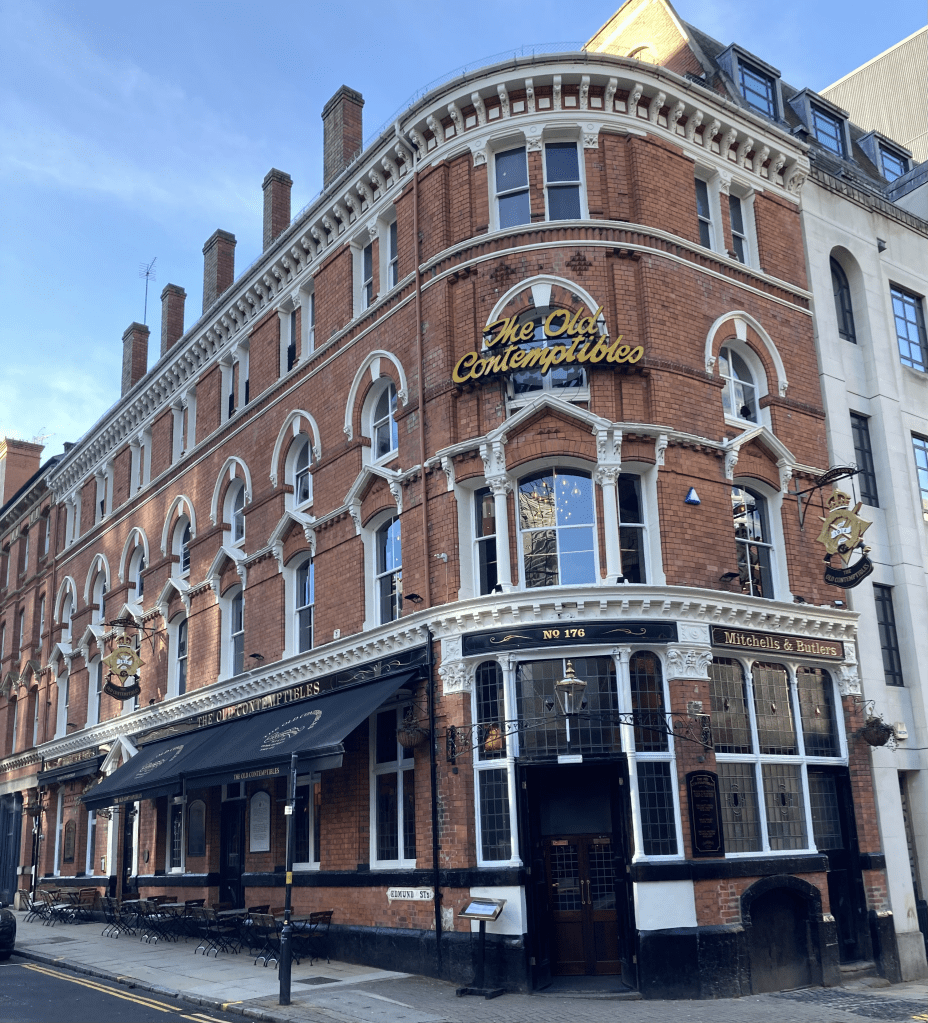
Fancy a Pint?

This caught my eye in The Guardian today.

Pubs are protesting government policies by banning Labour MPs – a storytelling tactic in itself. No marches. No manifestos. Just a simple, symbolic exclusion that says something isn’t working.

Then the Guardian adds a second layer of storytelling: an AI (presumably) image of Keir Starmer staring longingly at a pint he can’t reach.

And that’s why it works.

A politician who wants access but can’t get it.
A pint that wants customers, but can’t find them.
A pub dressed for Christmas, tinsel out, lights on – but business constrained by forces outside its control.

No anger. No lecturing. Just quiet frustration, framed in the most familiar of British settings.

It turns the Landlords protest against policy into something instantly human – and that’s why the image lingers long after the words are forgotten.

(Pic credit: The Guardian.)

One Idea.. Boldly Done

You see a lot of houses decked out for Christmas at this time of year… but this one made me stop in my tracks.

Not because it had more lights or brighter colours, but because it backed one idea.

A huge red ribbon wrapped around the front of the house – playful, confident, impossible to miss.

While many displays try to stand out through quantity, this one proved how effective a single, well-chosen gesture can be. No blinking lights, no competing colours… just one bold statement, delivered beautifully.

Is there a quiet lesson in that? You don’t always need to be the busiest or brightest. Sometimes the strongest move is picking one idea.. and really owning it.

Stand out by standing apart.

This post appeared first on LinkedIn.

What Stopped Me Scrolling

It wasn’t the sea of McLaren papaya that stopped me scrolling – it was the red arrow.

A proud dad (Steven Rutter), pointing out his software developer son, Harry, in a crowd of hundreds celebrating a world championship. And suddenly the picture changed. Not just a team anymore. It was individual people, each with their own story, their own journey, and their own moment they’ll never forget.

Every big milestone in engineering – whether it’s winning a race or launching a satellite – is built on countless unseen contributions.

And behind every success, there are always a few arrows we never draw… but should. Steven’s done the honours with this one.

This was originally on LinkedIn as a repost.

On to Something

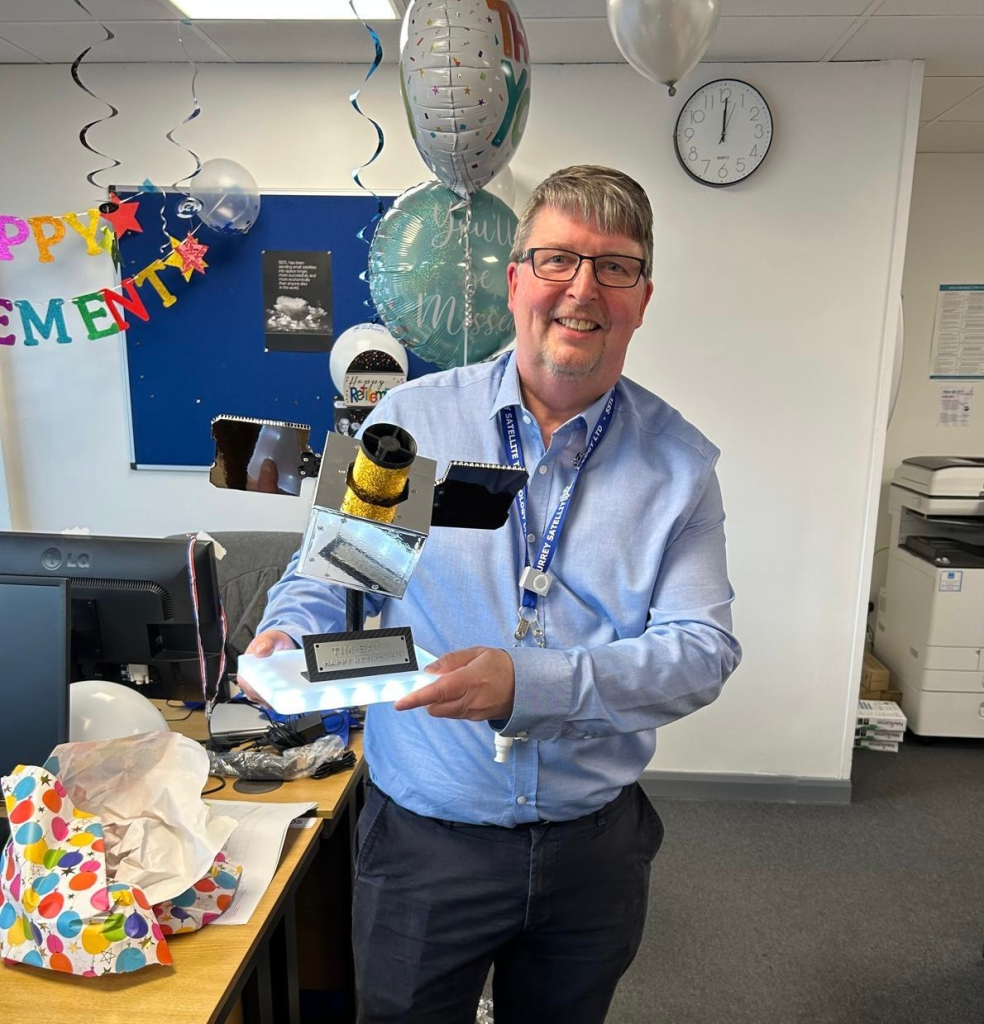
After our last staff family meeting of 2025, where I mentioned our Surrey Satellite Technology Limited (SSTL) 40th anniversary series is ending and there’ll be a new focus for next year, my engineering colleague Patrick Hope (in pic) stopped me on the way out.

He’d been thinking… and showed me an old Red Bull F1 video – The Life of a Bolt. And he suggested we could do something similar with a satellite part. Not a grand system. Not a mission. Just a single component, quietly doing its job.

It’s easy to assume that in an engineering company you want engineers to focus on building things and solving technical problems – and leave the ‘creative stuff’ to others.

But being technical doesn’t mean they can’t be creative. Often it’s exactly why they are.

There’s an idea I like about success coming from the agency of others; surrounding yourself with good people and then paying attention when they speak.

Patrick’s on to something here. Not because the suggestion is fully formed – but because he felt comfortable sharing it before it was.

So we’ll build it up together – and see where it goes.

PoleCam Gives a New Perspective

A small lesson in storytelling from our cleanroom this week.

We had an ITV News crew on site, and the cameraman, Jamie Beard, did something interesting. Since you obviously can’t fly a drone in a cleanroom, he used a small camera on a pole to capture this overhead shot – a perspective we’re not used to seeing in our manufacturing environment.

And suddenly the whole scene looked different.

Wider. Busier. More architectural.

Almost like a miniature world you could drop into.

It reminded me how much a story changes when you simply change the angle.
Most of the time we tell stories from eye level because that’s where we stand. But move the viewpoint.. even slightly.. and you reveal things that were always there but never noticed.

Clever work from Jamie… and a nice reminder that good storytelling could start with asking, “What happens if I look at this another way?”