One anxiety regarding the UK to Florence road trip was toll booths. The French and Italian ones being on the left. Not a problem with a passenger in a right-hand-drive old Range Rover. But this was a solo trip.
You can get a little box for the windscreen and glide through the automatic télépéage lanes. Nice ping. Queues bypassed. Charges taken automatically. But a single scheme covering both France and Italy seemed to need a European bank account. And my banking arrangements are boringly domestic.
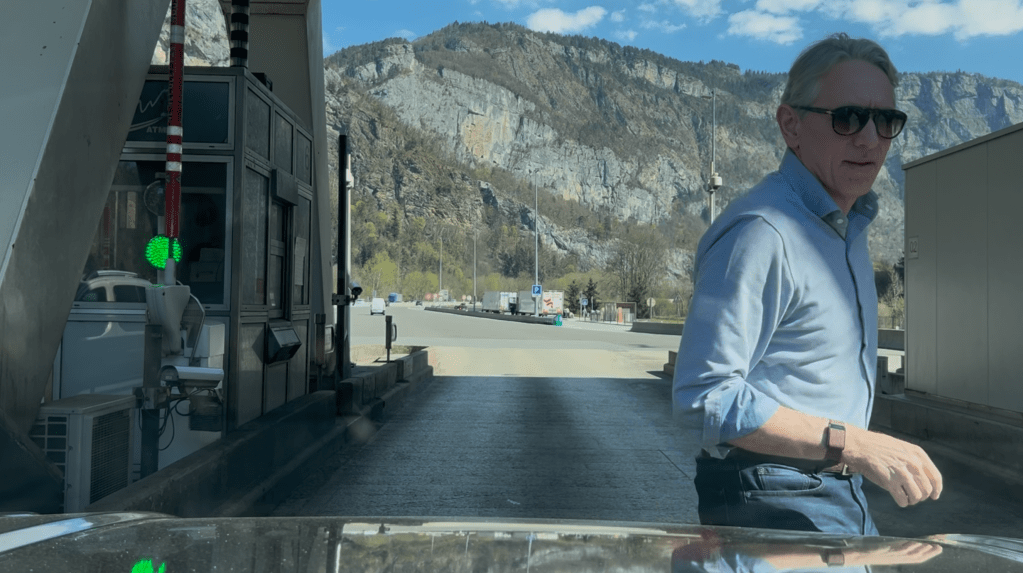
Shouldn’t have worried. You just get out and walk round… as captured in this pic taken at a French péage approaching the Alps.
One Italian booth refused my cards. I fed it cash. Another didn’t sense me because I’d stopped too far back. Pressed a button. All was well.
On the few occasions people queued behind me, I gave them a glance and an apologetic wave. They didn’t mind. One shrugged.. another smiled and waved back.
Once you see someone doing their best, it would be a bit much – even for an Italian – to lean on the horn.
‘Leave things tidy’ I’m muttering at a motorway services halfway down France en route to Florence. I used to work at one of these places as a teenager. Nearly 40 years later, I still look with horror at the people leaving an unreasonable mess.
I’m on autopilot. Stacking my cup and plate neatly. Wiping the table with a napkin. Even straightening the chair before I leave.
‘Pot Wash and Tables’ the supervisor would say when I clocked on back then. Meaning I had 8 hours clearing tables in the restaurant. And when the tables were clear I’d load the dirty plates, pots and cutlery into the industrial dish washing machines – watching out for gusts of steam at the back end of the conveyor.
Best be quick, or Janice on tea point will come in shouting again for more saucers. Then back out to clear tables. I can still see my brown fingers at the end of every shift, stained by stubborn tea bags refusing to come out of their pots.
I can also picture the congealed egg welded onto the stainless steel cutlery. And smell the ashtrays. Restaurants were smoking back then. Hard to believe now.
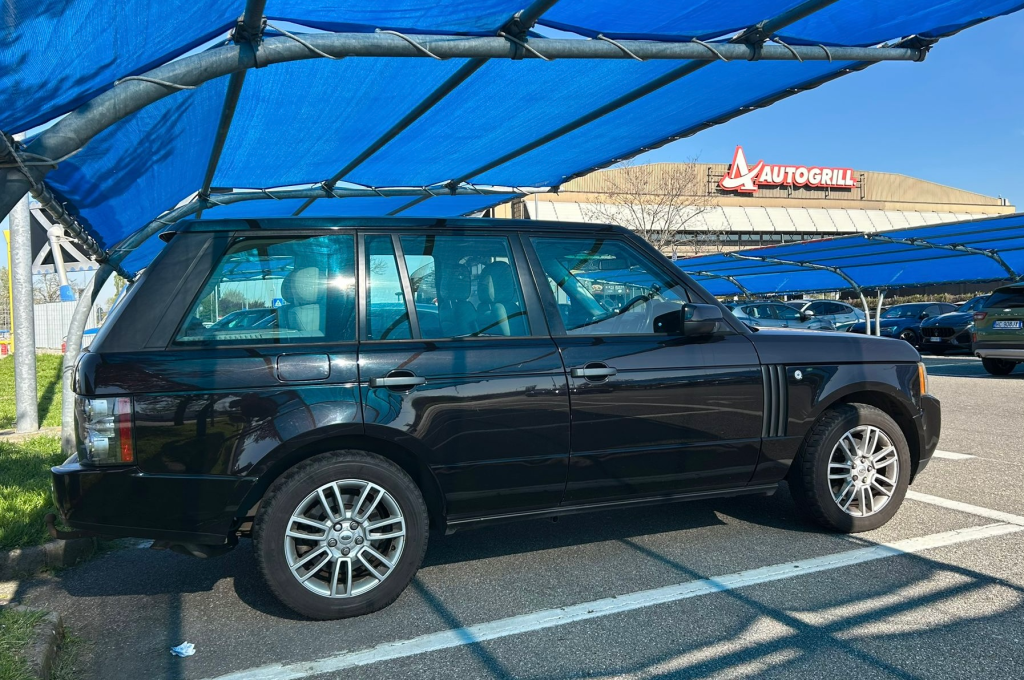
On my way down to Florence, I stop every couple of hours at services like this AutoGrill near Piacenza. Somewhere to let the old Range Rover rest, have a pee and stretch my legs.
Services are great places for people watching. Which I appreciate, being on a solitary drive. Wondering where that family is coming from or where that chap is going to… and what they do in normal life. I used to ponder on that when anchored there for my shift as everyone else passed through.
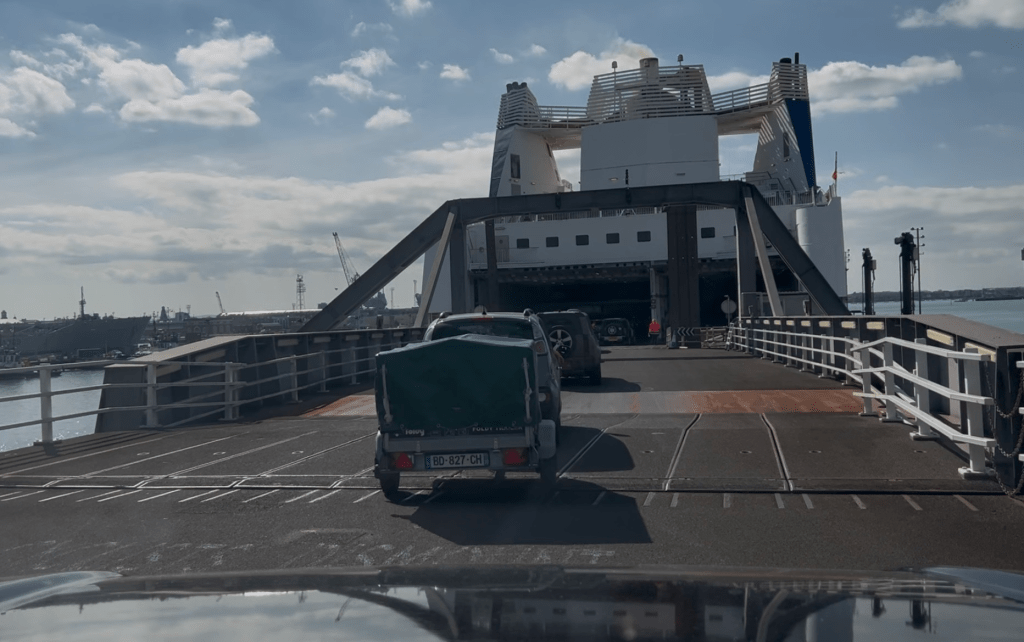
This is only my second voyage on a Brittany Ferry in 40 years. Hardly screams ‘loyal customer’. But I’m here again because of the first time. Funny how a brand experience can last decades.
Booking my first non-air trip to Italy, I had two key decisions to make. Rail or road? Not a hard one. I’m taking a bike over… love driving… and want some freedom and autonomy. Road it is.
Then Le Shuttle (Eurotunnel) or ferry. Also easy. Ferry. And that’s where it gets interesting. Because ferry makes less sense. The chunnel is faster, competitive and runs every half hour. But I didn’t want to use it.
I was drawn instead to a Brittany Ferry. Not a P&O one.. nor DFDS.. but a Brittany Ferry. It had to be Brittany. And I’m not even going to Brittany.
Our first family foreign holiday – apart from to Wales – was to a Eurocamp site near Douarnenez in Brittany in the early 80s. Dad packed us into the blue Vauxhall Cavalier… Mum read the map. Got the Brittany Ferry to Cherbourg and drove over. I remember parts of that holiday as if it was yesterday. Not 40+ years ago.
And so Brittany Ferries have captured my business once again. This time I’m paying… not Mum and Dad.
Some brand experiences stay with you. Especially the ones from childhood.
‘What’s your favourite section of the M40?’ asked a colleague.
Great question.. and after 13 years commuting between Shropshire and Surrey, I feel well qualified to answer.
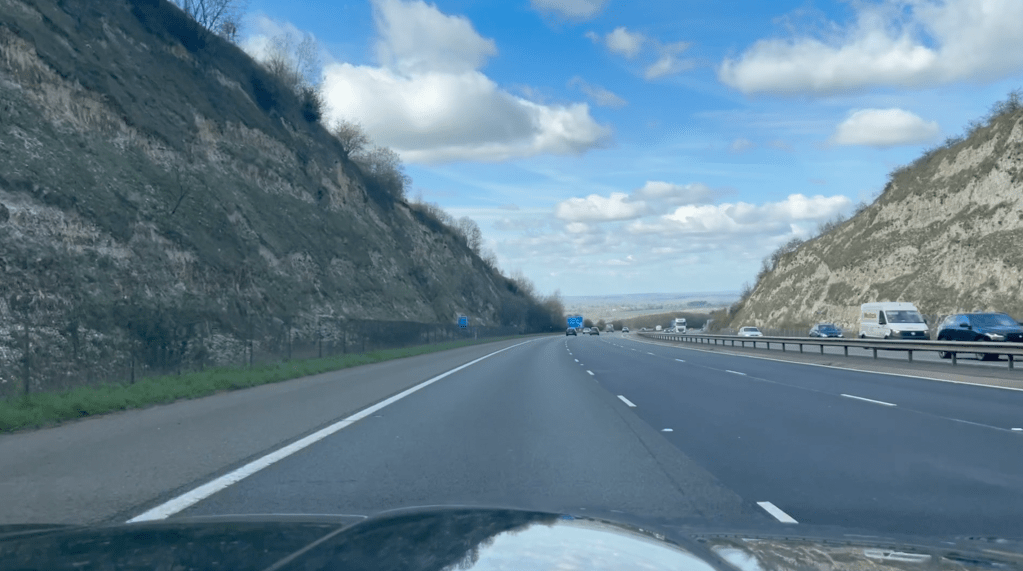
Depends which way you’re going. If north. Easy. The Aston Rowant cutting. Known as ‘the Canyon’ by local folk. The bit just after the BT Tower at Stokenchurch, where it plunges through the Chiltern Hills down to the plains of Oxfordshire.
Under the elegant single span curved bridge. Descend between the sheer, chalk walls of the canyon. The road gently curving to your right. You can’t see far ahead.. until it straightens. The canyon walls recede.. and the promise of the midlands lies gloriously ahead.
That’s the best bit. Seeing what feels like all of middle england in front of you.
Lovely how you can maintain speed all the way down despite coming off the throttle. A tenth or two miles per gallon satisfyingly gained.
This bit of road should uplift anyone. Always does for me. I’m on my way home.
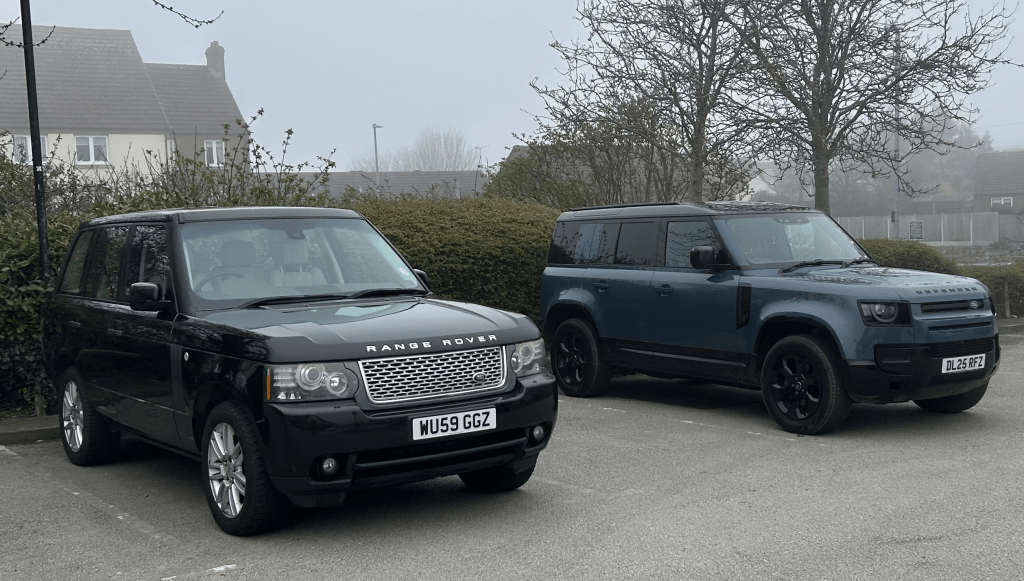
People who buy brand new Land Rovers are doing people like me, who buy old ones, a massive favour.
How so? Because without people buying these cars when new.. I have no entrance into luxury car ownership.
I’m looking at you, lovely blue Defender.
Rory Sutherland – my favourite Marketing Svengali – talks about this quietly fantastic altruism. Someone pays top money for a brand new Range Rover in 2009. It depreciates steadily in value until.. Bingo. I can pick it up for £10k.
I get the exact same car as the original owner. Provided I wait a few years first. Fourteen years.
Apart from this patience and a tolerance for the odd scratch and imperfection, there is one other thing you need. A maintenance budget. My ownership period is not just about enjoying a luxury vehicle. It’s about preserving it. On occasion that can be costly. £5k kind of costly… in my 2.5 years of ownership.
Thanks to the original owner, the Defender pictured here might also be mine one day. Perhaps in 2039.
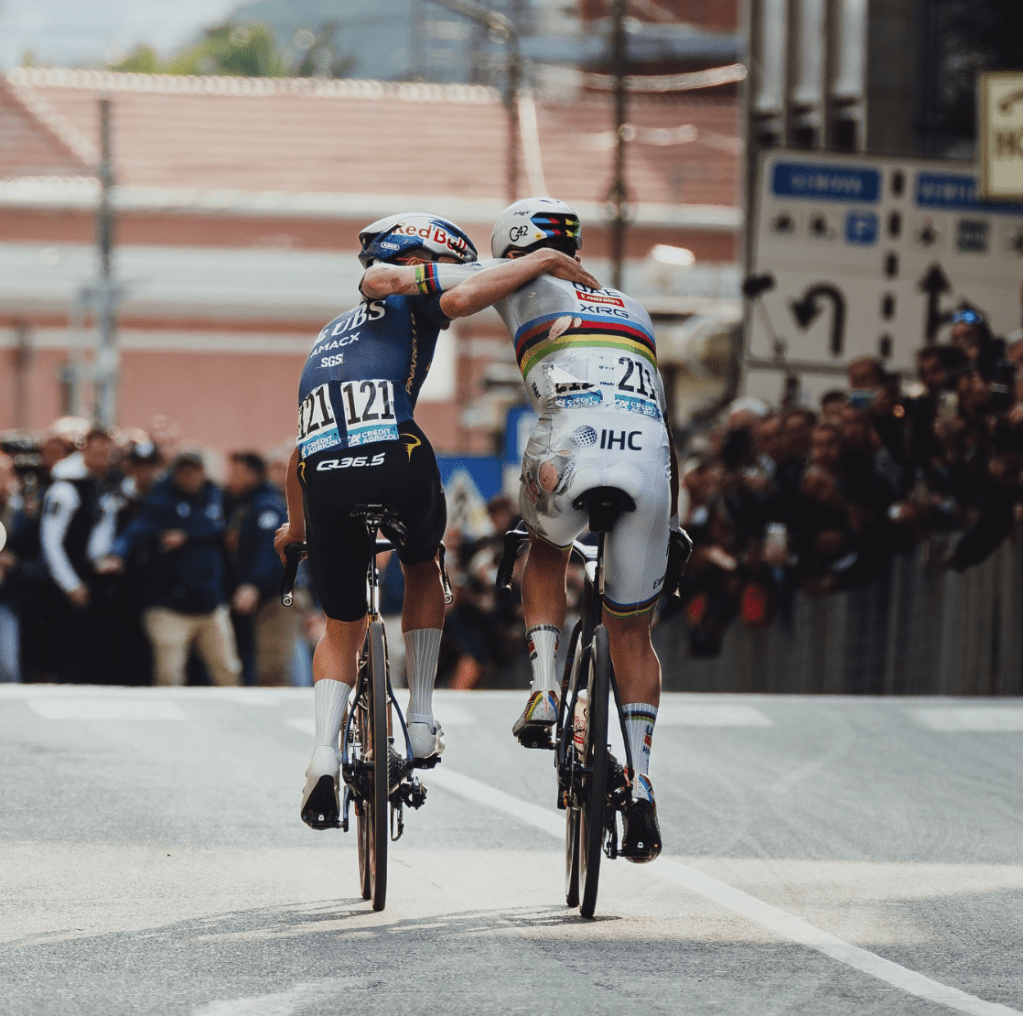
Last weekend’s Milan – San Remo finished with two riders descending the legendary Poggio into San Remo. World-Champion Tadej Pogacar and Tom Pidcock majestically held off the charging bunch, and were separated on the line by a scant half wheel. Pogacar raising his hands in victory.
Sport at its finest.
But the image that stayed with me came just afterwards. The only one I saw taken from behind. It was posted on Instagram by runner-up Pidcock (left). He made sure to credit pro snapper Alan Bučar Vukšić.
So how did he get this shot?
By positioning himself 200 yards beyond the finish line and quickly turning and firing again after they had passed. A different perspective. Uniquely captured.
I’m not bad with an iPhone. But this is proper photography. Bravo.
Visiting the Household Waste Recycling Centre should be a chore… yet isn’t. Even when it’s Saturday and you’re queuing to get in.
I’ve been coming to such places all my life. In the 70’s and 80’s they were called Tips.. Council Tips. ‘Can we come, Dad’ we’d ask, as he was hitching a trailer full of rubble and garden waste to his Cortina or Morris Ital.
Not much health and safety those days. Kids didn’t have to stay in the car, for one. I recall those tips being smaller, less demarcated. And instead of the current helpful staff in hi-vis orange, there was usually a solitary, surly bloke in a donkey jacket. His job was to man the gate – but he’d quickly come over for a nose if he thought you had something of value.
The Council Tips were done up years ago. Although they still seem to smell the same. But there are now friendly staff members ready to answer the inevitable ‘where does this go, mate?’ questions.
Luckily, the modernisation hasn’t removed the charm. Everyone shares the same purpose. Disposal. Watching your fellow tippers appeals to a curious mind. You find yourself quietly wondering, for example, why that chap is slinging that wheelbarrow when there’s clearly years of life left in it.
The tip is a place you want to linger. Fair enough. By the time you’ve queued up and reverse parked… you feel you’ve earned the right to take it slowly. To enjoy it. Perhaps see what the next lot are getting rid of, before you leave.
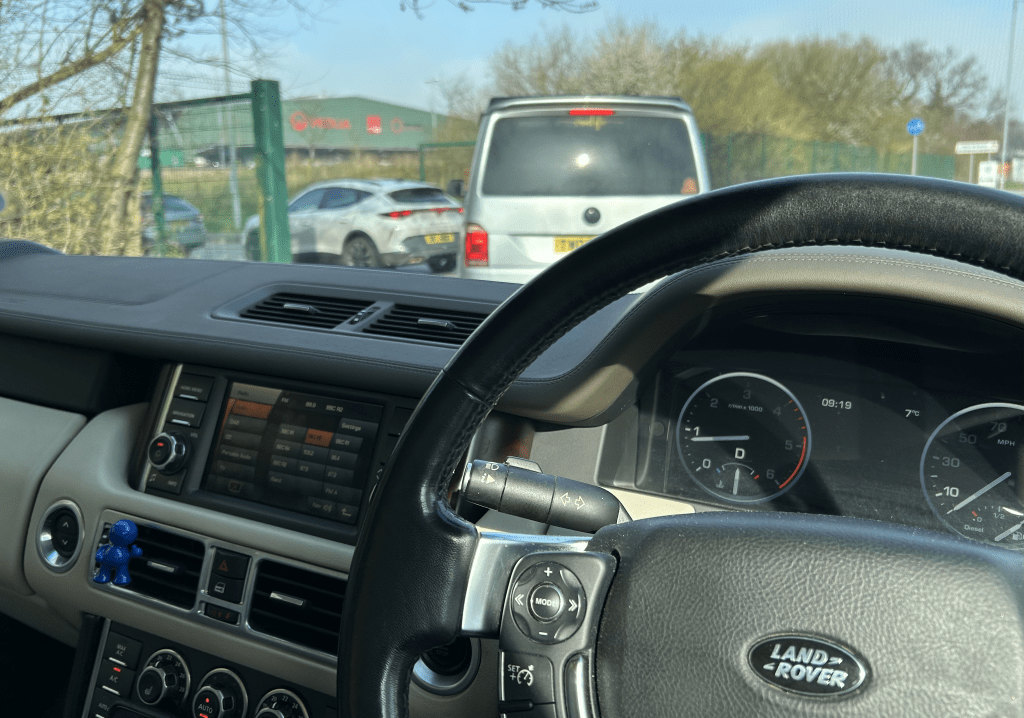
The old Range Rover feels lighter on departure. So do you. You’re smiling as you drive past the queue coming in. Maybe even nodding your head. Satisfied that the car has been load carrying for once… part of her repertoire. It’s good to exercise that now and then.
Good exercise for me also. I’ll be back next week.
The average UK worker endures almost an hour a day commuting.
For me, it’s rather more than that. I live in Shropshire and work in Surrey. Both glorious British counties. Separated by 170 miles.
I’m not complaining. Not today. Not when things look like this – see pic – once you’ve arrived home safe and sound.
Commutes aren’t usually this idyllic. The weather’s nearly always worse… especially in March. And it’s likely that something at work – or home – is playing on your mind as you shuffle slowly between the two. Usually in traffic.
But after doing this weekly commute for 13 years, I’ve had time to make peace with it and also better optimise the experience. Transform it from an obligation slightly dreaded… to something more appreciated.
Driving a car you love – and that suits you – makes for far better motoring.
My original Surrey-bound chariot was a Fiat 500 supermini. A cute, quirky little thing. Fun and reliable… but rattly and always a bit fragile next to the HGVs. Nicely cheap on fuel though.
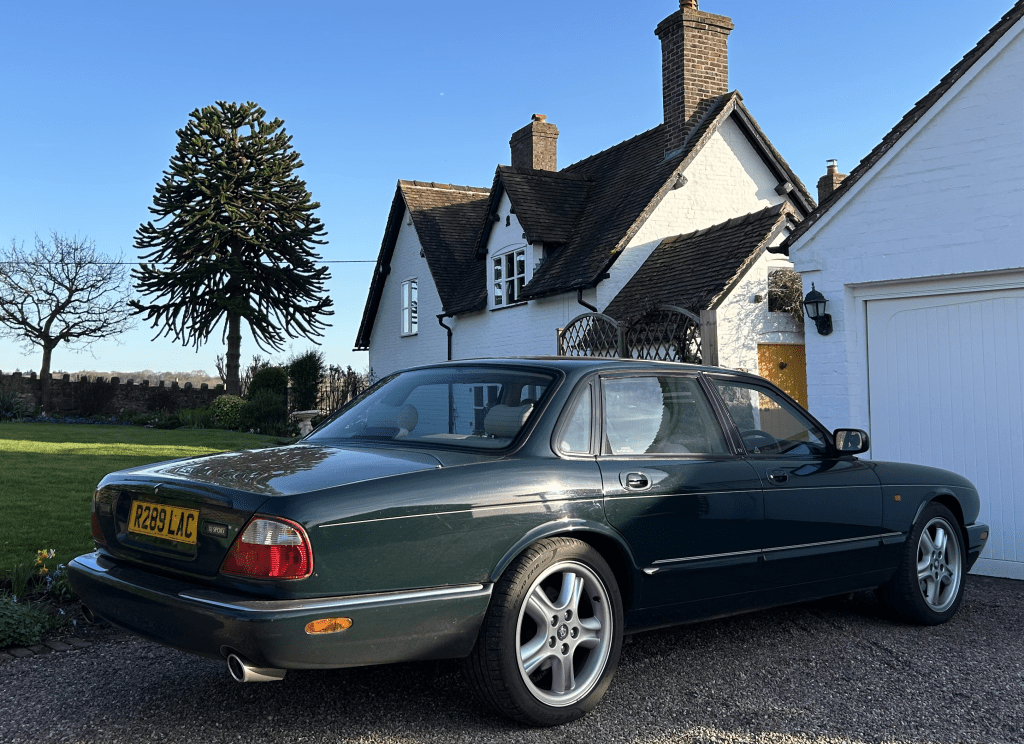
A few years on my finances were in better shape and my teeth were fed up with the rattling. So I splashed out on the old Jag pictured here – a similar model to the one my Dad had when new, 28 years ago.
The three-hour journey was transformed. I was in a car I adored. And after some light restoration and with ongoing attentive maintenance she runs better than something her age has any right to.
But it’s not just the machinery.
Shifting my departure times to miss the worst traffic is equally transformational.
This means getting up super early to be away by 4am and in the office by 7. Don’t panic… it’s only once a week. And it helps I’m an early bird and don’t despise being up when everyone else is enjoying 3 hours more sleep.
Then on the return leg a few days later I either leave at midday… or cruise home between 6-9pm when most people are off the roads and enjoying their evening.
It’s not always about the destination. It can also be about how you get there. Experience has taught me that the journey itself is worth optimising. Minimise traffic. Love the car.
You stop enduring the commute and start owning it.
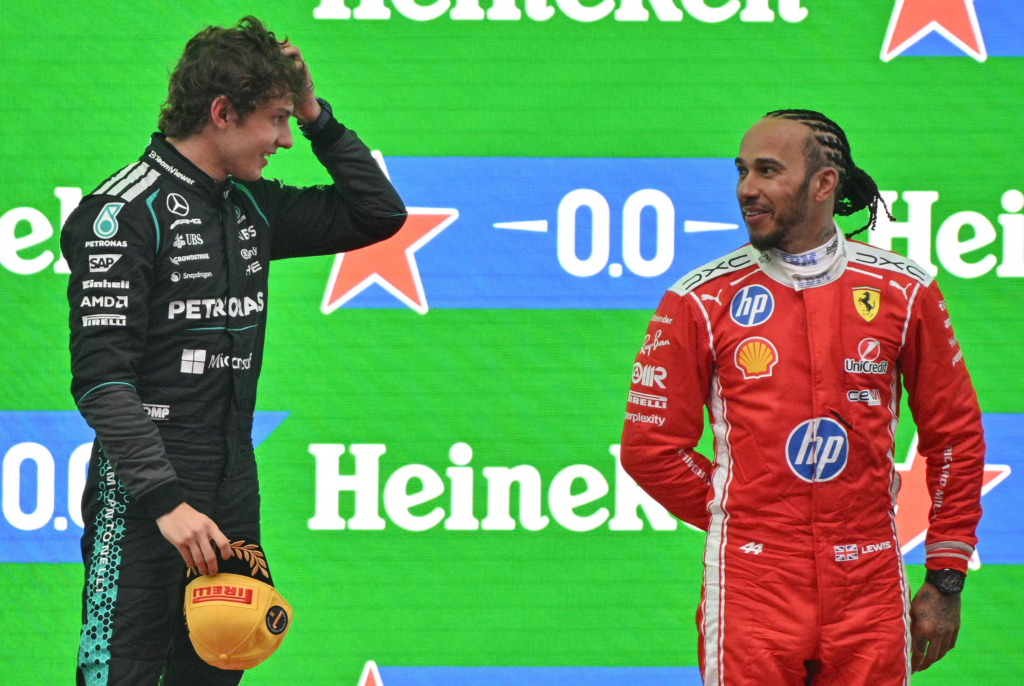
This race was more like it. And what a podium photo — capturing a lovely generational moment between first-time race winner Kimi Antonelli and Lewis Hamilton.
I hated the cars last week in Australia, but I can’t keep up a strop for long, so tuned in today in a better mood.
And stayed that way.
Partly because Carlos Sainz drove faultlessly to 9th for a couple of points in the under-performing Williams — always my favourite team. But mainly because Lewis Hamilton rediscovered his legendary touch in taking 3rd and his first podium for Ferrari.
Yes, Lewis had an awful first season in red. A year to forget. Not that his private banker would have minded the reportedly £50m base salary. But today Lewis had the clear beating of team-mate and long-time Ferrari darling, Charles Leclerc.
Credit to pro snapper Hector Retamal for this wonderful photo. It captures the affection between Hamilton and Antonelli — the young man who inherited his seat. Kimi looks like he can barely believe he has won.
Lewis appears paternally aware of that… perhaps also being reminded of his own first Grand Prix win, 19 years ago.
I travel to our house in Florence about ten times a year.
Usually Ryanair or EasyJet from Manchester to Pisa. About 7–8 hours from Shropshire door to Florentine porta, and about £400 all‑in — flights, airport parking, fuel etc.
Remember that figure.
Because I am seriously considering a slower, more expensive, but possibly far more enjoyable way of doing the journey.
Why? Because I am sick of air travel. The airport/security experience is challenging. The flights are cramped. And I’m getting more anxious by the year. Totally unreasonably, as I clearly have way more chance of issue or injury en route to the airport than on any commercial flight. But it’s my arse 12km from terra firma… and I don’t like it.
So I’ve been thinking about stowing my cabin luggage in the Range Rover and driving instead.
This started on a turbulent flight a year or so back. Captain Ryanair thought he would heroically land at Pisa. In a tempest. I later learned every other plane diverted. Ours did not. Even the cabin crew were hugging when we got down safe and sound. I vowed if fate spared me I would never fly again.
I did fly again. Five days later. You have to, or the fear takes over. But the idea of Shropshire–Tuscany–Shropshire by gentle waft over land never went away.
The idea grew recently. I have a bike needing to get to Italy. Too much faff to take it through the airport.
Yes, traditional couriers – FedEx, UPS etc – could collect it from the house. But you can end up paying import duty on its value. Not correct for a used personal item, but often the default outcome.
There are also “man with a van” services running the UK–Italy route. But that still means trusting a total stranger to carry your pride and joy 1,000 miles to Tuscany.
Mmmmm. Maybe not.
So I did what any thinking person does when caught on the horns of a modern dilemma. I turned to ChatGPT. Which turned into a gloriously enjoyable rabbit hole.
First. Calculations. ChatGPT had a think, asked for the real‑world mpg of my diesel Range Rover and gave me a range of £1k–£1.2k to do the return trip to Florence. This included fuel, ferry or chunnel, tolls and overnight stops. Punchy. About three times the cost by air. Plus it would take the best part of two days instead of 7–8 hours.
And yet. There might be something in this.
So I bantered around with my lifestyle advisor – ChatGPT – and before long it suggested I could offset the cost by offering to carry other people’s personal effects and objects of value from the UK to Italy.. or back. Genius!
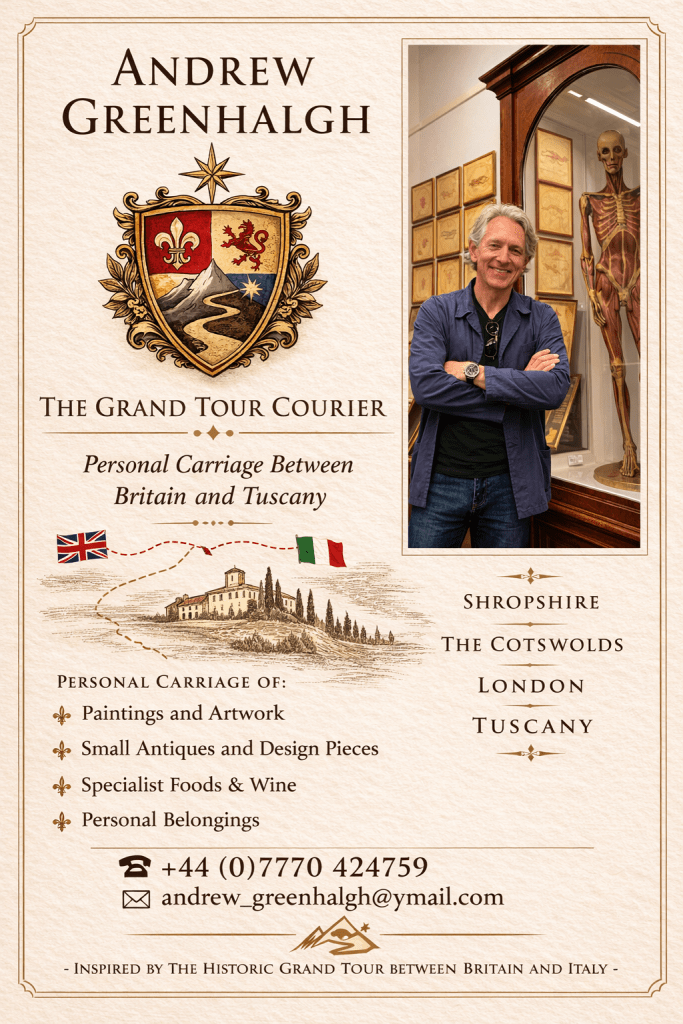
Fifteen minutes later we had a business plan and flyer (see pic) entirely generated by our online guru. Although fair enough, I had to upload a recent-ish photo, taken by my niece when we visited the wax anatomicals at La Specola Museum on Via Romana. Deftly using the sepia-esque colouring of the museum exhibits to stylise the flyer was classy and impressive.
What next? Maybe I will take my bike over and see how the land journey pans out in reality. The drive itself — two days through France, over the Alps, into Tuscany — is one of the great European road journeys. The original Grand Tour. I can stop where I like, eat well, decompress, explore. With the added bonus: nobody asking me to remove my shoes at airport security.
There are downsides for sure. But it’s got to be worth a go. Stay posted for updates.
 Andrew Greenhalgh