Jaguar & Tesco

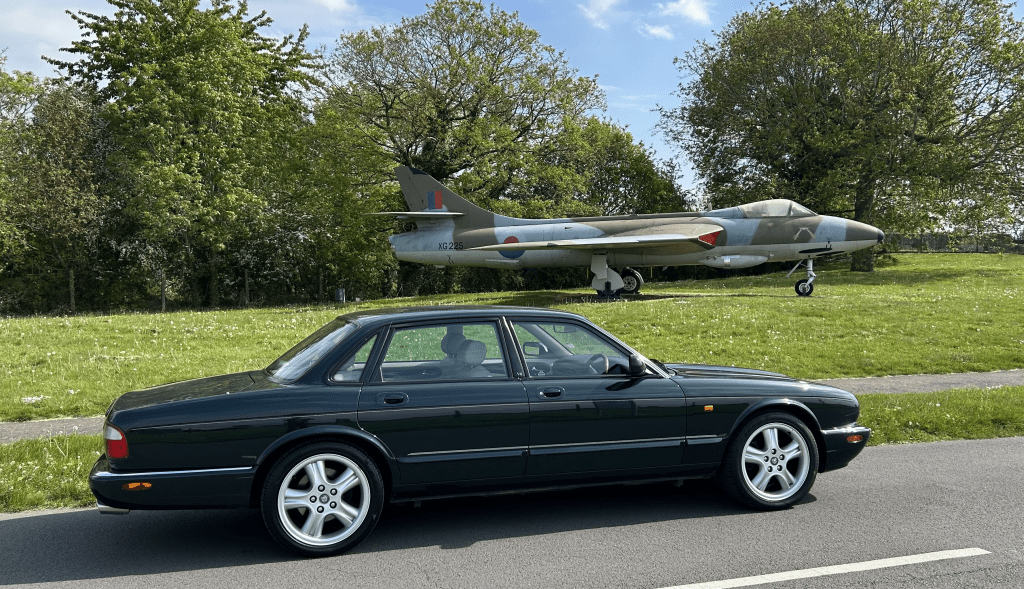
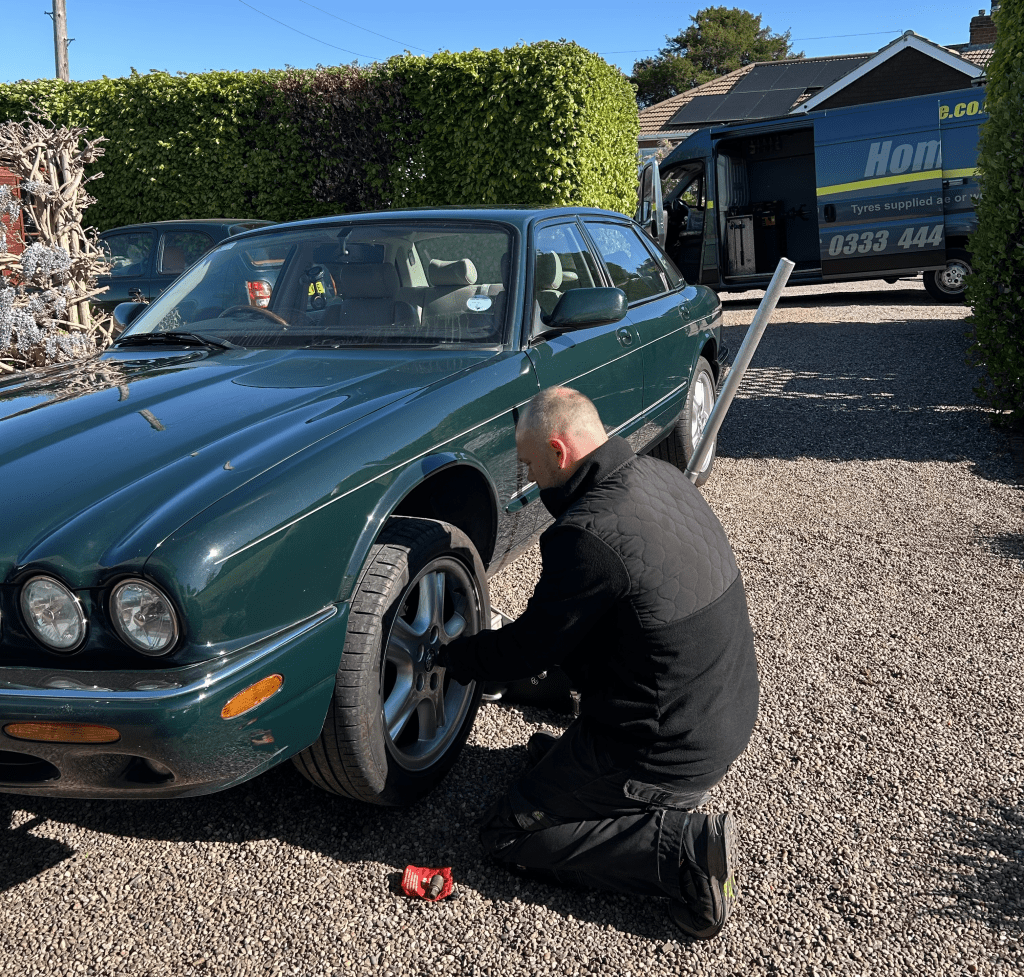
Does this 28-year-old Jaguar just spend its time gently wafting between a Shropshire cottage and the local Waitrose?

Not today.

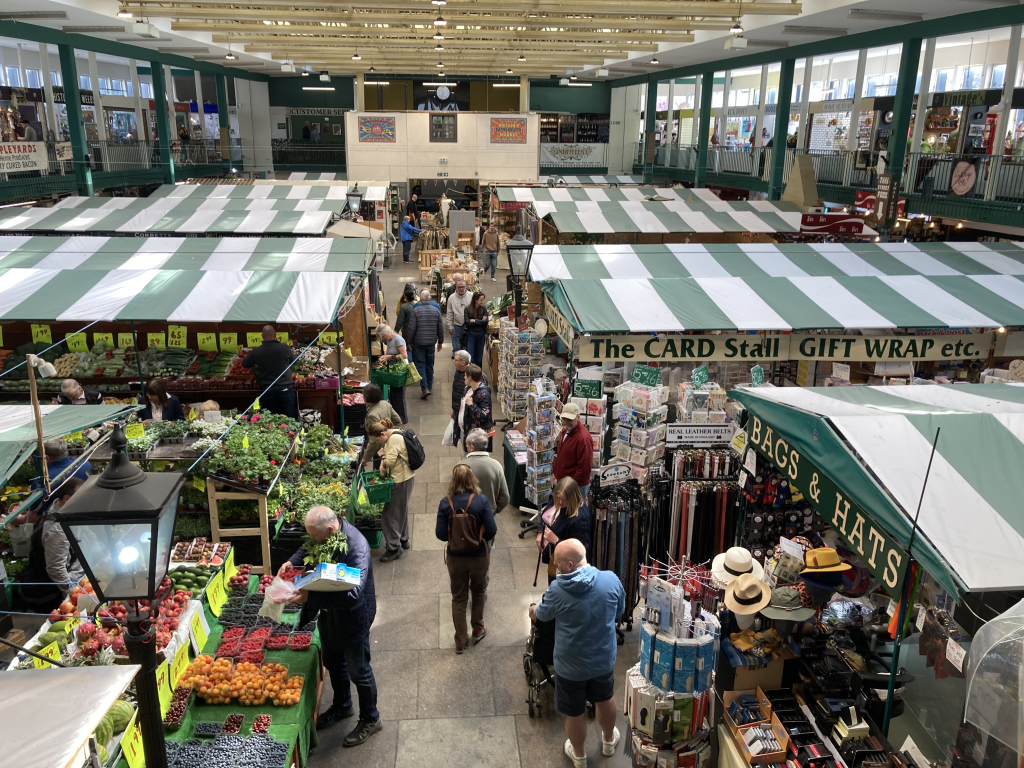
When commuting south, we also call in at Tesco Guildford – one of their stores with the familiar clock tower.

Mostly for breakfast berries and yoghurt. Though I occasionally visit the bakery. The jam doughnuts carry my recommendation – and probably a health warning.

Jaguar and Tesco have more in common than you might think.

Both are British brands that have been around for over a century. Tesco traces its roots to 1919. The forerunner of Jaguar began life in 1922 before adopting the Jaguar name in 1945.

Neither are perfect. Occasionally unfashionable. And yet woven into everyday life in a way newer brands would kill for.

7am is the best time at Tesco. Plenty of space for the Jag between the builders’ vans.

My fellow shoppers are either insomniacs, fellow office morning-larks or working folk stocking up on their way to a job site. We’re well outnumbered by blue-clad staff pushing trolleys around picking orders for home deliveries.

It feels peacefully industrious. I’m set for the day.

Becoming 18

Proud Uncle enjoys birthday beer with niece. Nothing unusual here.

Except in this family we’re flexible with the date. Isabella is a leapling.. born on February 29th. One “real” birthday every four years. In the intervening years we bring it forward and celebrate on the 28th.

Which means, ahem, that the beer pictured for her 18th was enjoyed a day too soon to be strictly legal.

All nieces are special to their uncles. Isabella is no exception. But she is also rare. Roughly 1 in 1,461 people are born on February 29th – about five million worldwide.

For most years, shifting the celebration makes little difference. But becoming 18 isn’t like the rest. It’s a rite of passage. And in the UK the law is clear: for British leaplings, adulthood begins on March 1st in their 18th year.

So as of today Isabella can legally cast the vote, sign the contract, buy the beer, place the bet, watch the 18-rated film and, should she wish, marry.

Yesterday she needed permission.
Today she needs judgment.

Will she be buying the next round? Unlikely. I rather enjoy treating her.

But at least now, when she does, we’re within the law.

On Longevity

My colleague Tim Setterfield retired today after 42 years at SSTL. In today’s labour market, that makes him an outlier.

In the early 1980s, when Tim left school, 1 in 5 workers would retire after 40+ years with the same organisation. Four decades later, that figure has collapsed to well under 1 in 100. And for those starting their careers today, it will be lower still.

What changed?

Pension reform removed the golden handcuffs. Industrial firms became less stable. Engineering shifted toward project-based work, and career progression increasingly requires ambitious people to move.

The interesting thing about Tim’s career is that he worked across multiple departments, functions and levels of responsibility. He joined when the company was young. As it grew, so did Tim. He had five or six careers — all under one roof.

Once upon a time, 40 years earned you a gold watch. Careers like that are so rare now, the tradition has died.

Fittingly.. Tim leaves with a model satellite instead.

The Trousers I Grew Back Into

I’ve had a chequered relationship with corduroy.

In the 1970s you’d struggle to avoid it. Brown, mustard, burnt orange. Trousers, dungarees, the lot. A childhood uniform.

Cords weren’t a problem for me… until a traumatic day at the playground.

This was pre-health-and-safety Britain. Equipment better suited to a commando course. Monkey bars over concrete. Merry-go-rounds capable of near-orbital velocity. Towering metal slides with no guard rails. (As per the example pictured.)

The slide was my favourite. But when polished metal meets thick corduroy, you get an emergency braking system.

I came to a halt halfway down. Very publicly. Mum never got me into cords again.

Through my teenage years and early adulthood I regarded them with mild disdain. Geography teacher territory. Slightly uncool engineer energy. Then I moved to Dubai.. where thick corduroy simply wouldn’t work.

But these past few months I’ve worn little else for office days: fine-wale corduroy in deep navy, and its twin in dark sage green. Warm. Textured. Surprisingly refined. They even look good creased – the winter equivalent of linen.

Glorious strides. They pair rather well with an old Jag and a Range Rover too.

Funny how you can grow out of something… and then, years later, find it fits perfectly.

In the Right Place

Shrewsbury has plenty of Tudor buildings. But only one features an upside-down carved dragon. 

On reflection it’s clearly not 15th century, unlike the building itself. A little research revealed that Puff the dragon – as locals call him – was carved in the 1980s and installed to cover an exposed beam.

Puff might not be original but he feels entirely at home. He solved a problem and speaks the same architectural language as the rest of the building.

Now consider a pair of proud stone lions flanking the driveway of a brand-new house. Something grates. Perhaps because the lions imply a lineage the house hasn’t had the chance to earn.

The lions aren’t the problem. It’s the context. At the end of a gravel drive, in front of a house that has gathered its own history, they make sense. On a new-build with block paving, they feel premature.

Puff, on the other hand, fits.

F1 Photography: Then & Now

Check out Formula One’s official drivers’ group photographs.. forty years apart.

The 2026 image, taken this week at pre-season testing in Bahrain, is heavily curated and stylised. The lighting. The spacing. The brand projection. Every driver perfectly placed, perfectly presented. Controlled. Immaculate.

Here, the photographer’s role is closer to David Bailey at a 1960s fashion shoot. The job isn’t simply to record who’s there, but to construct an image.. to project identity, intent and brand.

Now look at the photograph of drivers at the 1986 Adelaide Grand Prix.

Back then, the photographer’s job was almost certainly to capture a moment for history, and probably in a matter of seconds. Get everyone together. Press the shutter. Hope.

The result feels like a small triumph that it happened at all. Hands in pockets. Drivers half-turned. Overalls unzipped. 80s hair doing very 80s things. And smiles.. lots of smiles.

The 2026 image feels like it was made.
The 1986 image feels like it happened.

I suspect a Mansell, Rosberg, Piquet or Brundle would look back at that ’86 photo today and smile at the memory it represents. I’m less sure the 2026 drivers will feel the same in forty years’ time.

Defending the Micra

On pulling into my local Waitrose, I couldn’t help but park the little Micra next to this gargantuan Defender, knowing it would make for a good photo. Yes – it was cheeky.

We shouldn’t really compare them. Different cars, different jobs. I’m not going to cruise down to Surrey for work in the Micra, nor tackle snow-covered Alpine hairpins on a ski trip. But for nipping down to the shops.. which is exactly what’s pictured here.. it does the job more than nicely. Even with today’s Shropshire potholes, as long as you keep your eyes peeled and steer around them.

I like it that both cars were built by different generations of British car workers. The Micra up in Sunderland some 25 years ago; the Defender in Solihull just last year. Two factories, different eras, different design philosophies.

Two different shades of green also.. my favourite car colour. Perhaps the Micra wins that one, with its warmer, friendlier hue. The orange interior helps too. Mind you, the Defender may well have something equally playful inside.. if only we could see it through all that privacy glass.

Footnote: A sharp-eyed reader has pointed out that these modern Defenders are built overseas. Which raises an interesting question: is a Japanese-branded, UK-built Micra more British than a Land Rover made in Slovakia? I’ll leave that one with you.

Pub Names as Footnotes to History

Wandering the streets of Birmingham today, this magnificent pub building caught my eye. Then the name – The Old Contemptibles – made me smile.

We British have long used pub names to tell the story of our social history, quietly preserving things that matter. Sometimes confusingly so, until you dig a little.

I often stop in Ripley, Surrey – a landlocked village – where three of the pubs have distinctly nautical names: The Ship, The Anchor and The Jovial Sailor. Odd, until you realise Ripley sits on the old London–Portsmouth road, once well travelled by Royal Navy officers and sailors moving between the Admiralty in London and their ships.

In today’s case, The Old Contemptibles refers to the derogatory name given by Kaiser Wilhelm to the British Expeditionary Force in 1914.. a label the men themselves were only too happy to adopt as a badge of honour.

A badge long-since preserved in Edmund Street, Birmingham. Lovely.

When Certainty Slips..

A good reminder of why sport rewards attention.

Within the space of half an hour, two very different stories played out. First, a real high point for Team GB, with Matt Weston taking Britain’s first medal of the Winter Olympics Games after a dominant performance in the downhill tea tray. (skeleton.)

Then, a sharp contrast on the ice. Figure skating favourite Ilia Malinin, unbeaten for an age and widely expected to take gold, fell twice and finished outside the medals.

It wasn’t a lack of talent or preparation.. just one of those moments sport occasionally delivers when it reminds us once again that there are no certainties in life.

And that’s what makes it so compelling.