I can mow a lawn straight-ish. Top my cars up with fluids. Change a flat tyre or battery. Keep my bike on the road.
And that’s probably about it.
Which is why I always find it uplifting to spend time with people who are properly practical.
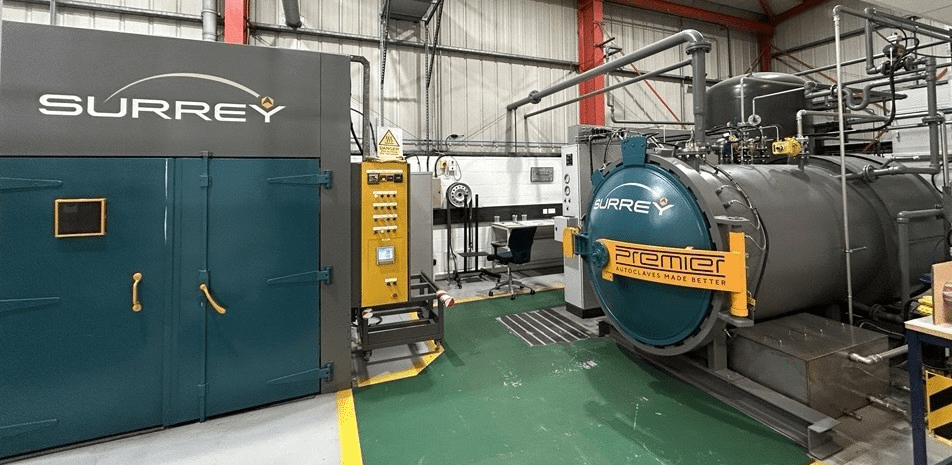
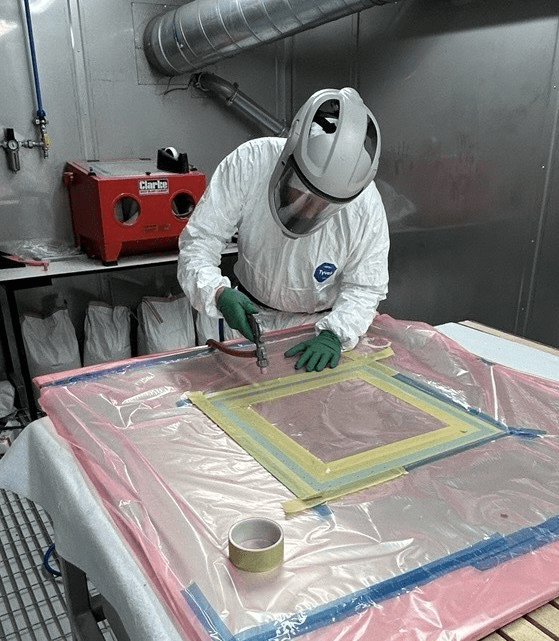
Like the team at our composites manufacturing facility in Bordon. A small group, working in a very traditional British engineering environment – and doing so with a real sense of industrious camaraderie.
You can picture it.
Lathes. Ovens. Autoclaves. Cutting tables.
This is where metal and composite parts are machined, bonded, etched, cured, prepared and stored – before ending up inside satellites that will orbit around 500 km above the Earth.
High-quality space hardware doesn’t just come from spotless cleanrooms or clever software.
It often comes from skilled hands, proven processes, and people who know how to shape raw materials into something that really matters – usually in modest industrial units on small industrial parks. Little more than sheds, really.
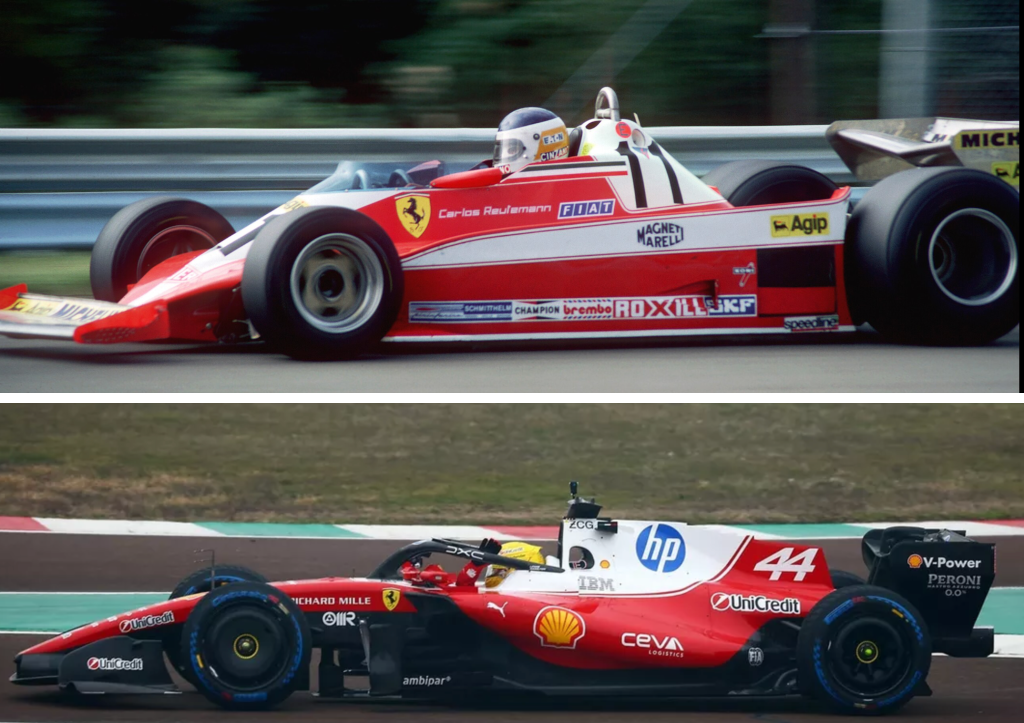
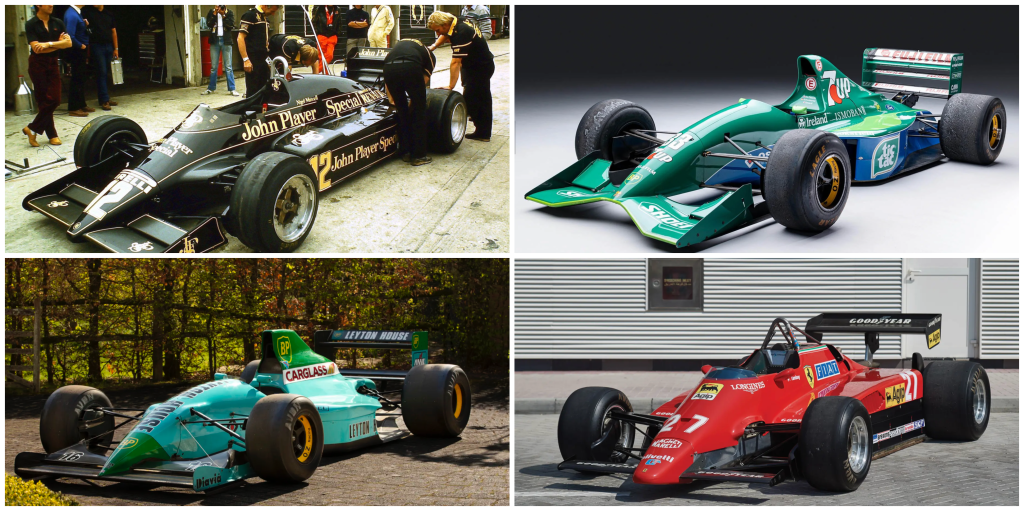
And for me, it’s always about the livery. The look. The visual design.
Fast cars aren’t always beautiful.
And beautiful cars – like the ones pictured – aren’t always the fastest.
But if we’re still talking about them… still admiring them… still lusting after them, decades after the season was won or lost, then maybe choosing this design was the right decision after all.
There are times when I make buying decisions before my brain is even invited to the meeting. Usually with cars.
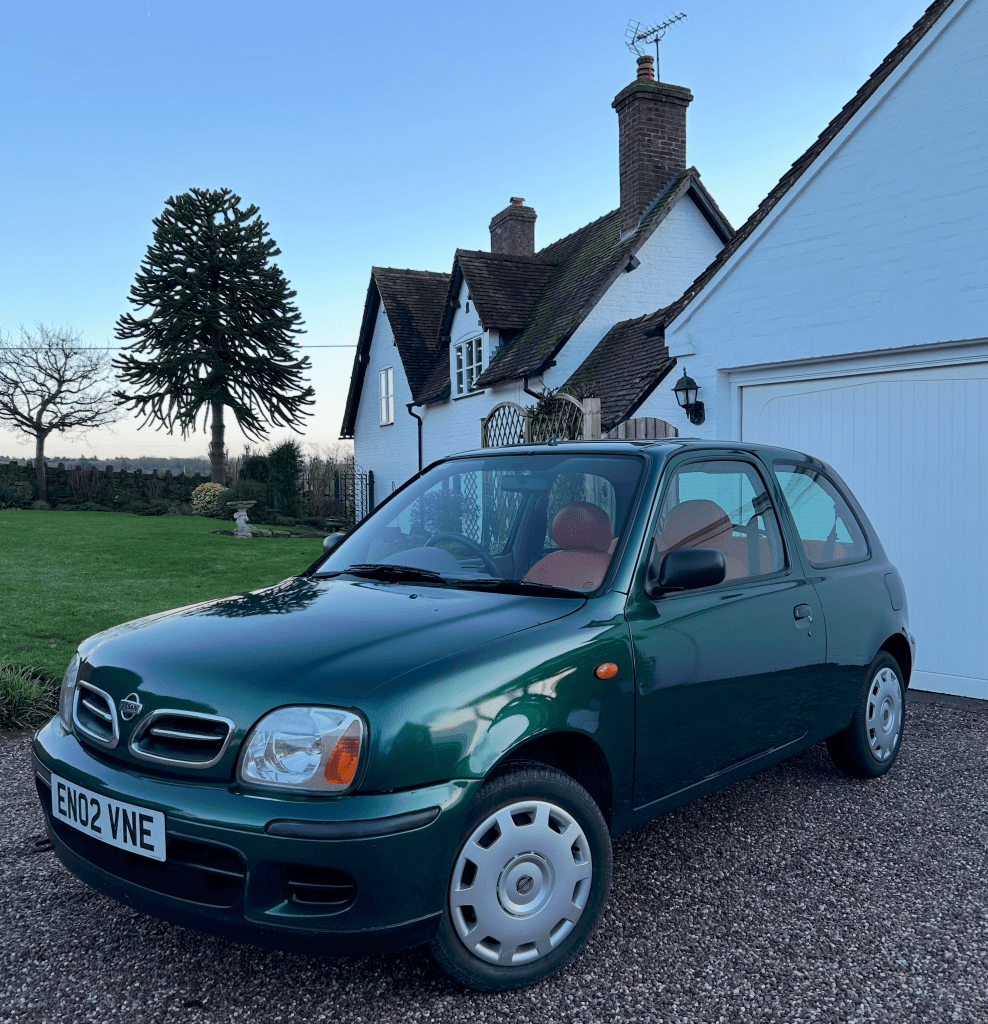
Last year that led me to this 24-year-old Nissan Micra – in glorious, if hastily resprayed, green, with bonkers orange faux-leather interior and retro-fitted electric windows. I ‘needed’ a local runabout, and the Micra was bewitchingly listed on Autotrader. So I rang up and bought it blind.
This is not wise, rational, economically-optimised behaviour. And it wasn’t the first time. My other two similarly aged cars – a Jaguar XJ8 and a Range Rover Vogue – were bought in much the same way.
Ok, none of them were expensive. The Micra was £3k. A grand over its fair market value – I knowingly overpaid. But I didn’t care. If it had been sold from under me, saving a thousand pounds would have been scant consolation.
Because here’s the truth: there are times when we’re not really choosing between options. The decision has already been made.. and we’re just catching up. In those moments we haven’t asked ‘which one is best?’ We’ve asked ‘how do I make this mine?’
I’m sure there’s a label for people like me – impulsive purchaser, meaning-seeker, hopeless romantic with an Autotrader habit. I don’t really mind. I know myself well enough by now.
When I’m in the market, one glorious photo is all it takes.
I heard the word ‘Teasmade’ today on the Vine Show on Radio 2.
And just like that, fifty years collapsed.
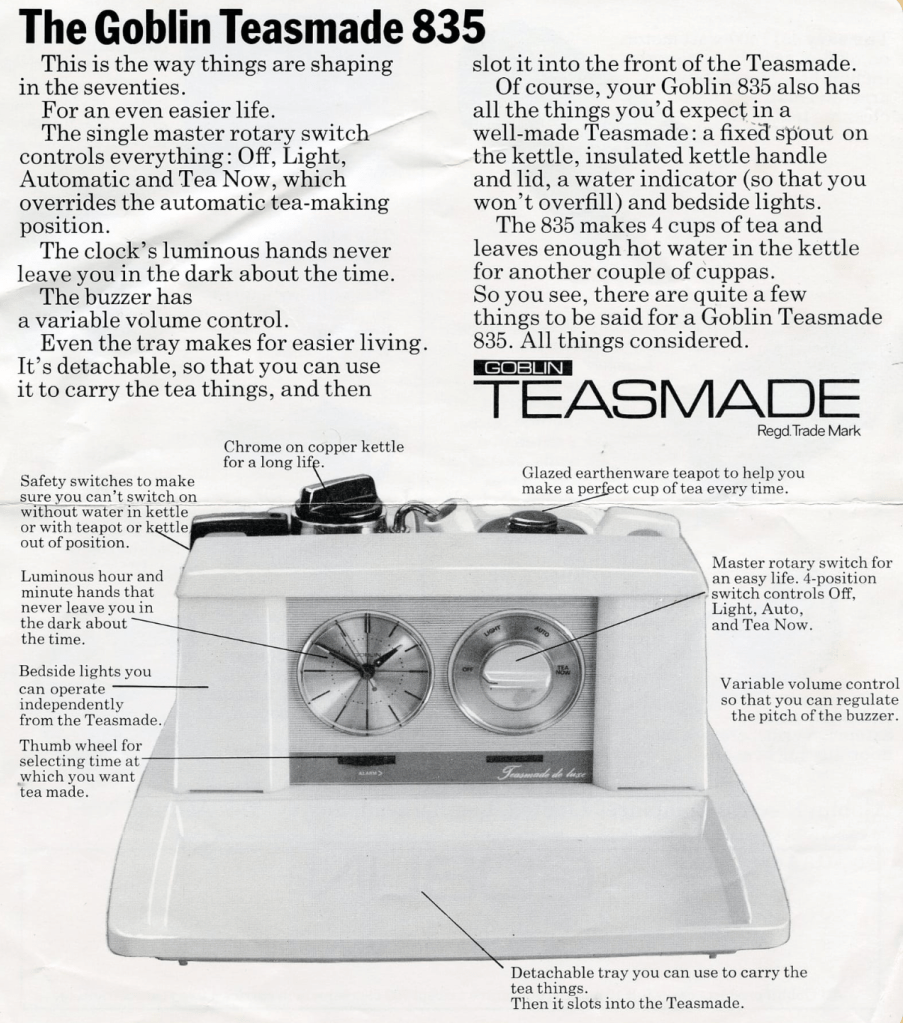
I was three years old again, climbing into bed between my Mum and Dad, waiting for the Teasmade to start hissing so the day could begin.
We had the model pictured here. And I would be given a small cup of my own – in a Mr Men mug. Mr Bump – the round blue one with the bandages.
Objects like this Teasmade end up in museums now. Partly to celebrate great industrial design. But mostly because they carry something else with them too.
For people like me, it isn’t just a gadget from the 70’s. It’s a time machine.
It’s drifting away from a SpaceX Falcon 9, hundreds of kilometres above the Earth – and anyone can watch it happen on a laptop or a phone. I’ve worked in space for many years, but moments like this still impress.
When the first SSTL satellite went into orbit in 1981, all we got was a phone call to say: “Yes – it’s gone up.”
That was it. No video. No telemetry dashboards. No live view of anything at all. Just a voice on the other end of a line.
Forty-odd years later, we can all watch as our satellites gently float free from their rockets, live, in real time.
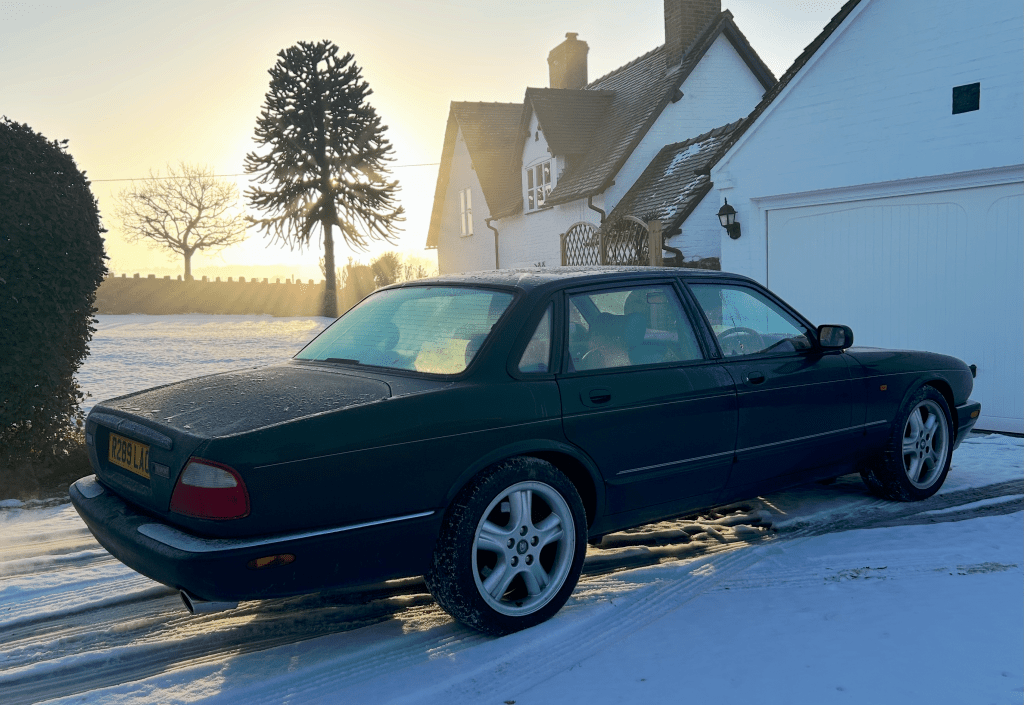
Meet my so-called summer car. A 28-year-old Jaguar XJ8. Not exactly designed for full winter-duty service. But here we are. Because my 16-year-old Range Rover – its usual cold-weather companion – broke down just before Christmas.. the Jaguar has been promoted. Or perhaps drafted. And it’s now responsible for the weekly commute between an icy Shropshire driveway and Surrey Research Park.
The Jaguar is enjoying this more than I am. Cars never like to sit around. They get grumpy when left unused. Being driven, exercised, warmed through.. that’s what they’re built for. It’s me that’s uneasy. Because once you’ve had a proper mechanical failure – thank you, The AA, for rescuing me – something temporarily shifts in your head. Your confidence takes a knock. And suddenly every vibration, every unfamiliar noise, every minor pothole or icy stretch of major road carries a question mark. Will we make it there? And will we make it back?
If you’re thinking, “well, what do you expect when you own old cars… you need a Plan C,” I’m with you. Because sitting quietly on the same driveway is exactly that. A 24-year-old Nissan Micra. The cute, rounded one. In fine, fingers-crossed fettle. Yes, it rattles. Yes, the sunroof leaks. Yes, it was bought for characterful local trips rather than heroic cross-country missions. But if it comes to it, there is a motorway odyssey in that Micra. I’m certain of it.
It’s not just LinkedIn users who start the New Year thinking that what they might need is a change of company.
F1 drivers can feel the same. The grass can look greener elsewhere – and it isn’t always the case.
Because while it’s true that talent travels, team fit doesn’t always follow.
At one team, our F1 heroes look effortless. Natural. At home.
At another, they can look tentative. Uncomfortable. A fraction slower.
And in a performance environment, that fraction is everything.
They haven’t forgotten how to drive. It’s just that the car – and the team environment around it – might not suit them.
Successful environments aren’t interchangeable. They’re cultures. Systems. Ways of working.
In normal working life, we talk a lot about talent. We probably spend less time thinking about where that talent actually works best.. and whether we’re operating in a system that truly amplifies our strengths.
It’s tempting to think the best people will succeed anywhere. F1 suggests the opposite.
The very best are often more sensitive to their environment than we might like to think.
They take celebrities – people whose lives feel remote, curated and polished – and bring them back down to eye level. Not by attacking them, but by placing them in situations that feel painfully familiar.
They expose how grand titles often hide messy reality. ‘Head of Marketing’ sounds impressive. Many of us know it can just as easily mean team of one, juggling strategy, execution and the printer that’s just jammed again.
They also gently challenge backstories. Not in a hostile way, but with a raised eyebrow. A quiet pause. A reminder that past roles have a tendency to grow more senior, more influential, more decisive the further away we get from them.
What’s clever is that none of this is said explicitly. It’s implied. And that’s why it works.
Good humour doesn’t lecture. It recognises. And the best of these graphics succeed because they tell several small truths at once – about status, titles, memory and storytelling – while letting us laugh at ourselves in the process.
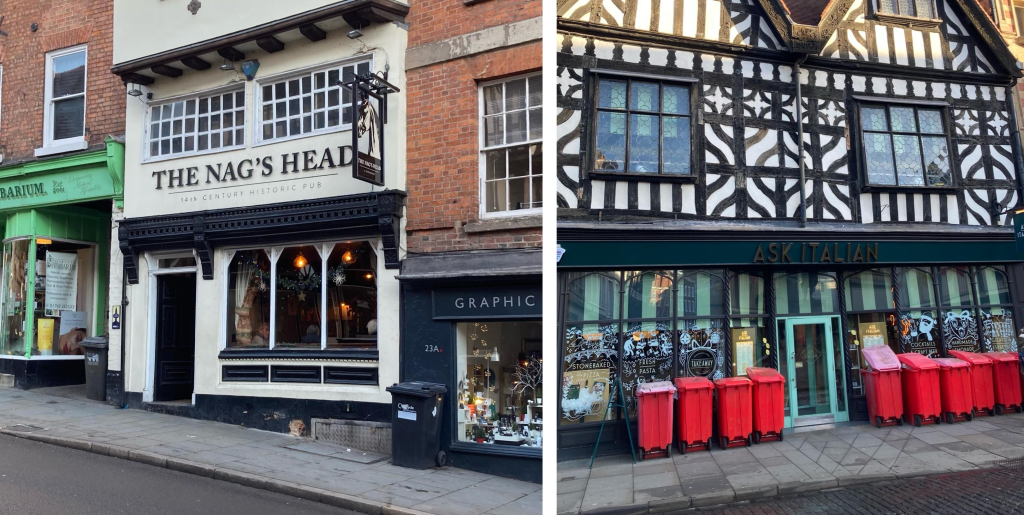
Two buildings in Shrewsbury. Both historic. Both full of character.
One has two black bins, quietly doing their job and almost disappearing into the scene.
The other has a row of bright red bins that completely dominate the view – pulling your eye away from a genuinely beautiful Tudor façade that’s survived for centuries.
Nothing here is wrong.. rubbish needs collecting. And the black and red bins may well serve different purposes, carry different things, or be subject to different rules. This may simply be how it has to be.
And yet visually, the impact is enormous.
Most places, brands and organisations often aren’t undermined by big decisions.
They’re impacted – for better or worse – by practical, operational details that feel unavoidable, but still carry emotional weight.
There isn’t always an easy fix.
But noticing the difference feels like a good place to start.



 Andrew Greenhalgh